
Reviewed · ARCTIC ICE FLOATING SESSIONS
Helsinki: Floating Experience in a Survival Suit
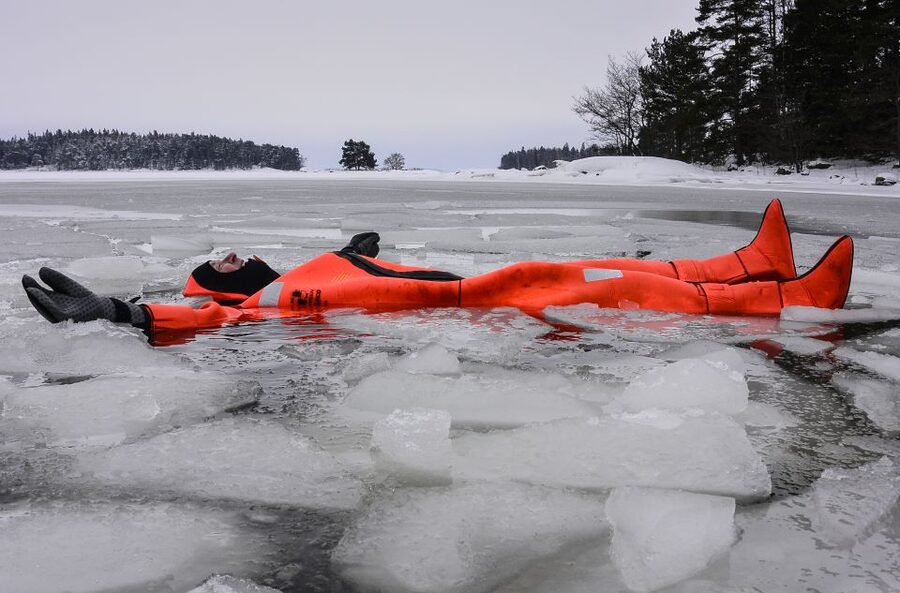
Floating in a survival suit feels like sci-fi in Helsinki. You slip into a thick neoprene survival suit and the water turns from intimidating to calm and almost quiet. Instructors like Olli keep it practical, so the safety talk is actually useful.
What I love most is the combo of warm, dry comfort and real instruction. You learn sea rescue basics, survival actions for a cold-water situation, and how hypothermia works, while still getting time to float and relax. Guides also take photos and share them right after, which is a nice souvenir after you come back up.
One consideration: the suit can feel snug around the face, and if you keep looking around or sitting upright to paddle, your neck can get tired. Also, it is not for everyone, since it is not suitable for mobility impairments and it requires a height of at least 155 cm (5 ft 1 in).
In This Review
- Key highlights to expect
- Helsinki Floating Experience in a Survival Suit, the Core Idea
- The survival suit: how you stay warm and dry
- What the instructors teach you at the water
- Open water season versus ice conditions in Helsinki
- Open water season: rescue at sea and relaxed floating
- Ice conditions: ice behavior, effects, and calm control
- The flow of your 1.5-hour session, step by step
- What to wear and bring for real warmth
- Who should book this Helsinki winter bathing experience
- Price and value: is $159 fair for 1.5 hours?
- The best parts that earn the near-perfect rating
- Should you book this Helsinki survival-suit floating experience?
- FAQ
- How long is the Helsinki floating experience?
- Do I need to know how to swim?
- What should I wear or bring?
- Does the tour run in bad weather?
- What is included in the price?
- Is this activity suitable for everyone?
Key highlights to expect
- Warm, dry floating in natural sea conditions with a survival suit that keeps you comfortable
- Sea rescue and survival instruction, including hypothermia basics and what to do in a real emergency
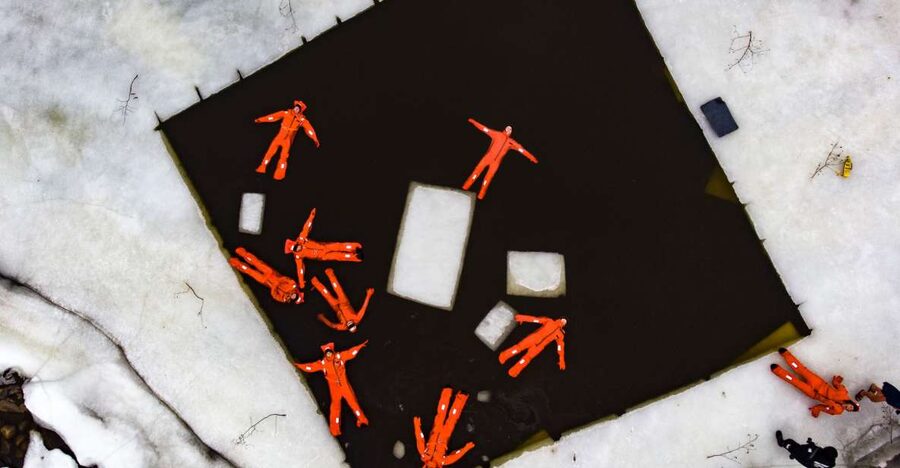
- Open water versus ice sessions, with different focus depending on whether conditions are frozen or not
- No swimming experience needed, and you are taught what to do step by step
- Guides like Olli, Oli, and Leif make it personal, with friendly coaching and photos after
Helsinki Floating Experience in a Survival Suit, the Core Idea
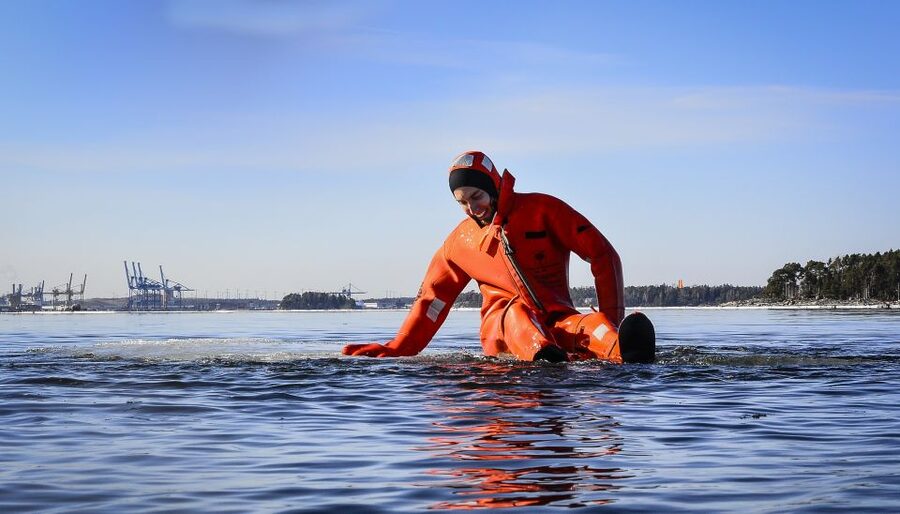
Helsinki’s water can look gorgeous, but cold water changes everything fast. This is exactly why this activity exists. You do not just “go for a swim in winter.” You float in a survival suit, learn the basics of staying safe in frigid water, and get taught simple actions that matter if you ever face a real cold-water situation.
The setting also helps. Even with the big city around you, the moment you’re out there is mostly silence, breathing, and that strange calm of being supported by the water. The experience leans hard into relaxation, but it never forgets the survival purpose.
And yes, you can make this trip work even if you are not a confident swimmer. The session is built for people who need reassurance, clear instruction, and a safe environment.
The survival suit: how you stay warm and dry
The suit is the big reason this works. You slide into a neoprene survival suit that is designed to keep you warm and dry while you’re in the water. That matters because cold is not just uncomfortable, it can affect your breathing and decision-making quickly.
What you’ll notice is the contrast: the Baltic Sea feels raw and icy at the surface, but the suit helps you stay comfortable enough to focus on what your instructor is teaching. That means you can actually learn rescue and hypothermia basics instead of just thinking about how cold your legs are.
There is a practical trade-off. Several participants note that the suit is not the most comfortable around the face, and positions that require you to sit upright or look around can strain your neck. It is not a deal-breaker, but it is worth knowing so you can plan your comfort.
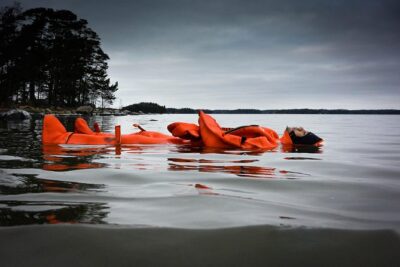
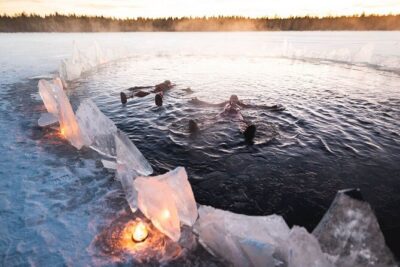
More suits zipped for the ice float:
What the instructors teach you at the water
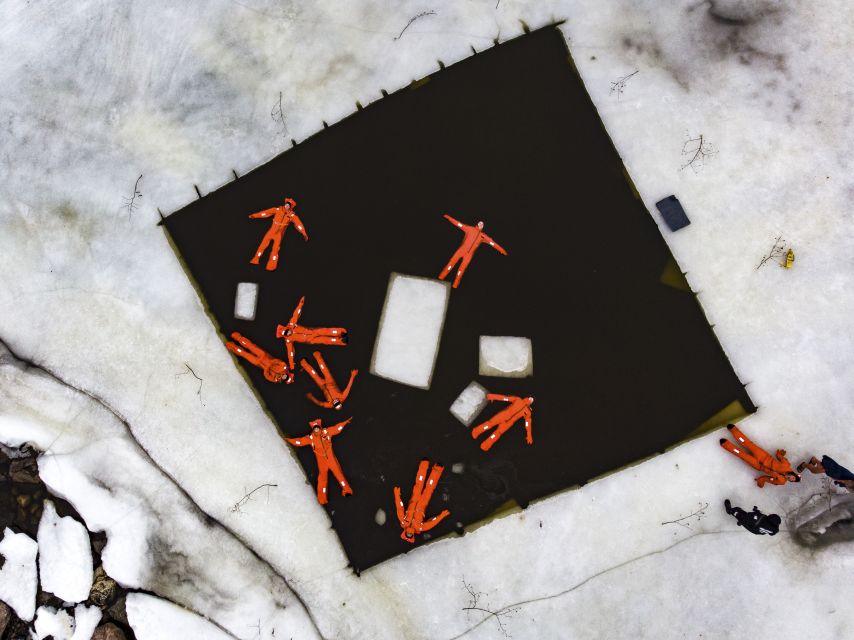
This experience is equal parts fun and safety education. You get instruction from qualified instructors in English, and the content is aimed at what you should do if you end up in cold water.
Expect lessons that cover:
- Sea rescue basics, including what rescue situations involve
- Survival actions in a real cold-water scenario
- Hypothermia, what it is, and why timing and clothing matter
- How winter bathing connects to safety, when done carefully and with understanding
You also practice small, guided “survival challenges.” In ice conditions, people describe things like self-rescue actions, plus activities that test movement and awareness without turning into chaos. The vibe is supportive, with clear steps and patience, especially for first-timers and non-swimmers.
In real terms, this is the difference between a novelty photo and a skill-based experience. If you spend time near Finland’s water, this kind of knowledge feels more grounded than generic travel advice.
Open water season versus ice conditions in Helsinki
The most important detail is that your session changes depending on what conditions allow. The activity runs in natural conditions, and the instructors adjust the focus.
Open water season: rescue at sea and relaxed floating
When the water is not frozen, the emphasis shifts to sea rescue at open-water conditions. You’ll still get that weightless, slow floating time, but the teaching centers on cold-water survival thinking, plus relaxation that does not ignore safety.
This is a great option if you are visiting during milder stretches, or if you just want the floating and the educational talk without the extra ice element.
What the guides in Helsinki point to next
- Helsinki: Sightseeing Canal Cruise with Audio Commentary★ 4.5 · 1,299 reviews
- A Finntastic Walking Tour in Helsinki★ 5.0 · 700 reviews
- From Helsinki: Nuuksio National Park Half-Day Trip★ 4.8 · 688 reviews
- Helsinki: Tallinn Guided Day Tour with Ferry Crossing★ 4.6 · 670 reviews
Ice conditions: ice behavior, effects, and calm control
When conditions are icy, the focus becomes ice behavior and what it does to you. People also report that ice days can include playful but safety-minded moments, like walking on the frozen Baltic Sea, jumping into the ice water, or helping break a larger section of ice during guided activities.
Even when it sounds wild, the emphasis is still on awareness and control. You’re not left to “figure it out.” The instructor guides your actions and keeps everything within safe limits for the conditions.
The flow of your 1.5-hour session, step by step
You’ll be glad this is only 1.5 hours. It’s long enough for comfort and learning, but short enough that the cold never becomes the whole event.
Here is how the session typically feels, from arrival to exit:
1) Arrive early and get set up
You need to arrive 15 minutes before the start time. That extra time matters for suit fitting and getting everyone briefed. The operator may notify you if the location needs to change due to wind or ice conditions, which is a smart, real-world safety adjustment.
2) Suit-up and a safety briefing
You’ll get instruction on what to do before you enter the water. Even if you are nervous, this part usually helps a lot because it turns an unknown experience into a series of clear steps.
3) Entry and floating
Then comes the “wait, I can breathe and I’m warm” moment. The suit helps you settle in, and instructors guide how to be comfortable enough to learn. Expect a relaxed pace that still keeps the session focused.
4) Survival and rescue practice
Next, you practice survival-related actions and learn what rescue looks like from a real cold-water perspective. This is where the education becomes more than theory.
5) Relaxation time
After practice, the experience shifts again into calm. Closing your eyes, breathing, and losing yourself in the silence is not just a poetic pitch. In practice, it’s the feeling you get once your body stops panicking.
6) Photos and wrap-up
Multiple guides are known for taking pictures during the activity and sharing them right after. That makes it easier to remember the day without trying to handle a camera while you are concentrating on staying calm and safe.
What to wear and bring for real warmth
This activity is not about fashion. It is about staying comfortable inside a neoprene suit and keeping your core warm around the edges.
Bring:
- Comfortable clothes
Wearing your own wool pullover and wool socks is recommended. Wool helps keep warmth even in cold conditions, and it pairs well with the winter-suit setup.
Practical tip: plan for layers that feel easy to move in. You want clothing that won’t feel restrictive under the suit and won’t make you fuss with adjustments at the water.
Not allowed:
- Alcohol and drugs
Also, there are no stated weather restrictions. The tour operates rain and shine, so dress like you’re going to be outside for a while, not like you’ll be indoors in a cozy café.
Who should book this Helsinki winter bathing experience
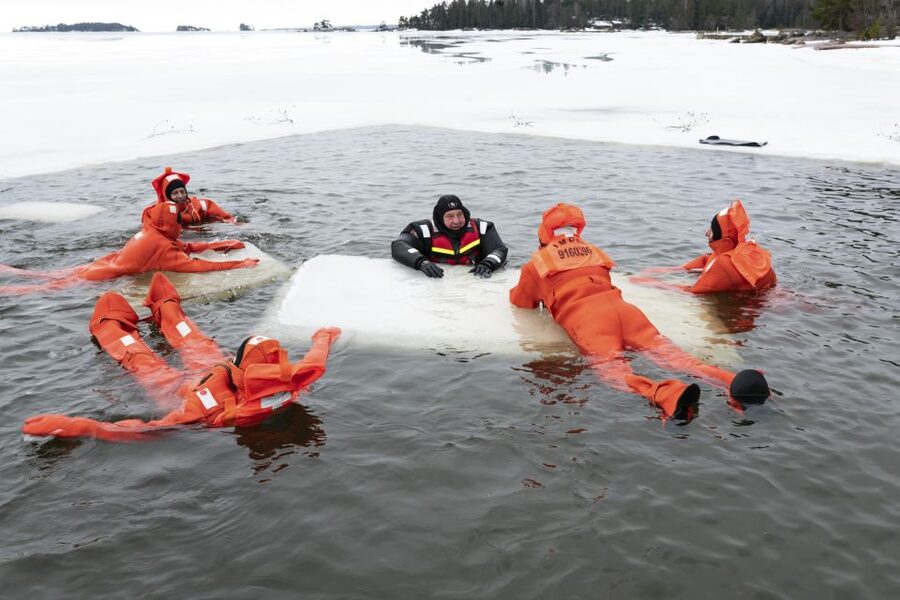
This is a great fit if you want a unique Helsinki winter experience that combines fun with practical cold-water knowledge.
It is especially suitable for:
- Non-swimmers or anyone who gets nervous in cold water
- People who want a safety-based activity, not just a sightseeing stop
- Travelers who want something in Helsinki that feels like a real local winter skill
It may not be a fit if:
- You have mobility impairments
- You are under 155 cm (5 ft 1 in)
Group dynamic note: you might be with a group that includes different ages and backgrounds, and one group size noted is around 13 people. That variety is usually a plus because instructors adjust their approach to the pace and confidence level of the group.
Price and value: is $159 fair for 1.5 hours?
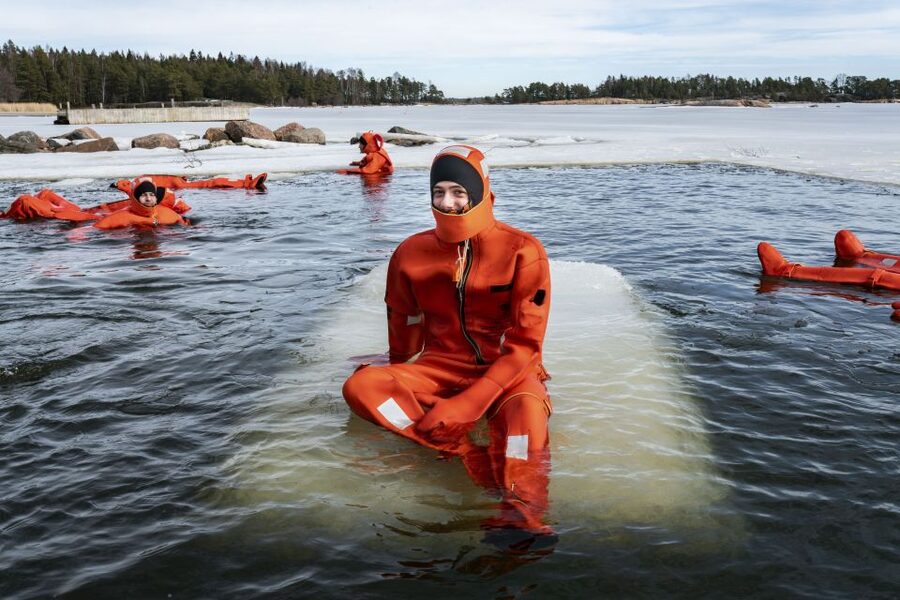
$159 per person is not a “cheap activity,” but it is also not overpriced for what you get. You are paying for three things that usually cost money separately:
- A survival suit (the key safety gear)
- Qualified instruction in English
- A full, guided experience in natural sea conditions, adjusted for open water or ice
You are also getting something many city activities do not provide: direct learning that helps you understand a real hazard. Hypothermia basics and rescue guidance are not trivia. They’re the kind of knowledge that can matter later if you spend time outdoors near cold water.
If you compare this to paying for a standard winter activity without safety training or equipment included, the value becomes clearer. The suit and instruction are the heart of it, and the fun side is honestly the bonus.
The best parts that earn the near-perfect rating
The strongest praise is consistent across many accounts, and it points to why this tour performs well.
1) Comfort in the suit
People repeatedly say they did not feel cold in the water, which is the real make-or-break factor.
2) Instructors who teach and reassure
Guides like Olli, Oli, Leif, and Patrik come up often for being patient, friendly, and clear in English. That calm instruction is what turns nervous energy into participation.
3) A relaxing, weightless feel
Even on icy days, the experience is described as relaxing once you are in the water. You’re not fighting a workout. You’re floating and learning.
4) Photo moments
Having photos and videos shared after the session reduces the stress of trying to capture the experience while you are focused on safety.
Should you book this Helsinki survival-suit floating experience?
If you want a winter activity that is genuinely different, and you like the idea of learning cold-water survival instead of just taking winter scenery selfies, I’d book it. This is one of those experiences where the skills make it feel smarter, and the floating makes it feel like a break.
Book it if:
- You are curious about winter bathing and want real safety education
- You are a non-swimmer and want guided confidence
- You enjoy experiences with instructors who stay calm and supportive
Consider skipping or asking questions first if:
- You have mobility issues that could make getting in and out harder
- You are uncomfortable with snug gear around the face
- You want a purely warm, cozy experience with no cold-water element at all
One more practical note: the booking setup is flexible, with options for free cancellation up to 24 hours in advance and reserve now, pay later. If you’re planning a Helsinki winter trip and weather is uncertain, that flexibility can take some pressure off.
FAQ
How long is the Helsinki floating experience?
The duration is 1.5 hours.
Do I need to know how to swim?
No swimming ability or experience is needed.
What should I wear or bring?
Bring comfortable clothes. Wearing your own wool pullover and wool socks is recommended.
Does the tour run in bad weather?
The activity operates rain and shine, and there are no weather restrictions stated. The location may change due to wind or ice conditions.
What is included in the price?
You get a survival suit and an instructor.
Is this activity suitable for everyone?
It is not suitable for people with mobility impairments, and it is not suitable for people under 155 cm (5 ft 1 in). Also, alcohol and drugs are not allowed.
Fresh tracks out of Helsinki
- 5-Day Cultural Capital Tour in Helsinki, Porvoo, and Tallinn
★ 5.0 · 4 reviews - Helsinki Highlights: walking tour with local guide
★ 5.0 · 4 reviews - VIP Highlights Helsinki Sightseeing Private Service
★ 4.5 · 4 reviews - Helsinki Gems: Happiest Country Experience from Cruise Port
★ 4.5 · 4 reviews - Evening Cruise
★ 3.5 · 4 reviews - From Helsinki: Luxury Trip to Tallinn Ferry +VIP Car
★ 5.0 · 4 reviews - Explore Helsinki’s Art and Culture with a Local
★ 4.5 · 5 reviews
Arctic Ice Floating Sessions, compared.
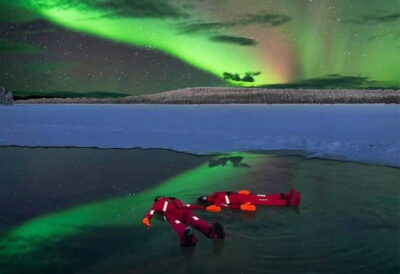
Ice Floating in Forest Lake with Aurora Borealis
Read our review →
Icebreaker Cruise with Ice Floating and Transfer
Read our review →
Daytime Ice Floating Rovaniemi, Frozen Lake Experience
Read our review →
Aurora Arctic Ice Floating in Rovaniemi, Small-group
Read our review →Ice Floating in Forest Lake with Aurora Borealis
Read our review →Browse the lists this tour appears in