
Helsinki history is best on foot. This private walk strings together big sights and smaller street scenes, so you get a clear sense of how the city grew and what Finns care about today.
I really like the guide-led pacing, especially when you are walking from Senate Square into the city’s religious, political, and food stops without having to plan every turn. I also like that you get a customized route plus a written list of what to do and where to eat after the tour, so the rest of your trip feels easier.
One thing to watch: Helsinki Cathedral entrance is not included. There is also a quick reality check on time, some stops are short, around 5 to 15 minutes each, so go in with an open mind and tell your guide what matters most.
In This Review
- Key things that make this Helsinki walk worth your time
- A 2 to 3 hour Helsinki walk that gets you oriented fast
- Senate Square and the National Library: power, education, and a city’s big attitude
- Helsinki Cathedral and Uspenski Cathedral: two styles, one city, and a few puzzles
- Presidential Palace, and why history feels political in Helsinki
- Market Square, Old Market Hall, and Kauppatori: food, harbor life, and easy souvenirs
- Havis Amanda and Esplanadi Park: the soft side of Helsinki
- Runeberg, Pohjolan toimitalo, and Aleksis Kivi: monuments that teach you how Finns see themselves
- Central Railway Station and Oodi Library: from arriving to living
- How the route customization actually helps your trip
- Price and value: is $105.34 per person fair for what you get?
- Who this Helsinki walk suits best
- Should you book this private walk through centuries in Helsinki?
- FAQ
- How long is the Private Walk Through Centuries in Helsinki?
- Is this tour private?
- Where does the tour start and where does it end?
- Is pickup offered?
- Is Helsinki Cathedral entrance included in the price?
- Does the tour use a mobile ticket?
- Can the route be adjusted to my interests?
- Is Uspenski Cathedral open every day?
- Is free cancellation available?
Key things that make this Helsinki walk worth your time
- A private group experience only for your party, so you can ask questions and adjust the route
- A friendly, professional guide, with Tatiana specifically praised for being kind, helpful, and fun
- Real city mix, Senate Square and the library, then churches, markets, parks, and modern Oodi
- Practical local tips included, covering what to do and where to eat for the rest of your stay
- Frequent free sights, most stops are free, with the main extra cost being Helsinki Cathedral entry
A 2 to 3 hour Helsinki walk that gets you oriented fast
If you are the kind of traveler who hates wandering in circles, this format works well. In a single stretch of time, you see the buildings that shape Helsinki’s identity, and you learn how different eras left their fingerprints on the streets.
The tour is designed for an easy pace, about 2 to 3 hours total. You get a professional guide, a personalized route, and time to swap in a couple of preferences rather than being stuck on autopilot.
You will also notice that the route is built around variety. One minute you are at grand civic buildings, the next you are looking at harbor life and everyday food, then you end with a modern library that feels like a public living room.
Senate Square and the National Library: power, education, and a city’s big attitude
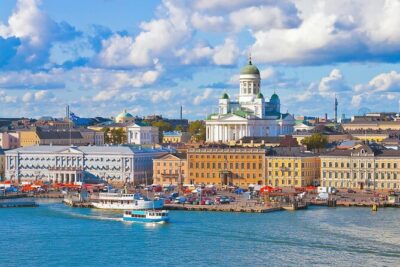
The walk starts at Senate Square, a natural anchor for understanding Helsinki’s government and architecture. Helsinki was founded around 1550, and this square is tied to the city’s early story, including the idea of a first Helsinki elsewhere that you will hear explained along the way.
A key reason to start here is the way the buildings set a tone. You are in a space that feels official and carefully composed, and your guide helps you read why it looks like this. You also get a reference point for later architectural comparisons, especially once the route moves into other styles.
Next comes the National Library of Finland. This is where the city’s “learning” side shows up in stone and classical form. You will hear how the library collection traces back to 1640, even if the building itself is tied to Helsinki’s later capital era. It is a quick stop, but it makes the whole city feel more intentional.
Both stops are free to visit, which matters when you are trying to keep your budget under control during a short stay.
More Guided Walks in Helsinki
Helsinki Cathedral and Uspenski Cathedral: two styles, one city, and a few puzzles
The itinerary gives you a strong contrast by pairing the Lutheran Helsinki Cathedral with the Russian Orthodox Uspenski Cathedral. That contrast is the point. You are not just seeing churches, you are seeing how different histories and communities shaped Helsinki’s skyline.
At Helsinki Cathedral, the main extra cost is the entrance ticket, which is not included. The cathedral is also famous for the way it makes you look twice, including questions you might have about where the bells are and what is going on underneath. Your guide’s job is to help you notice details that you might otherwise miss.
Then you move to Uspenski Cathedral, built in 1868 and supported by donation money, with a connection to serving Russian military. This is where you feel the change in atmosphere immediately, even before you go inside, because the style is so different from the Lutheran look you just saw.
There is one practical scheduling note: Uspenski Cathedral is closed on Mondays. If your trip lands on a Monday, plan to check whether the guide adjusts the route in real time.
Presidential Palace, and why history feels political in Helsinki
You do not spend a long block of time inside the Presidential Palace, but the pass-by matters. This is a place tied to the president’s work and major ceremonial events, and it also connects to the period when Russian rulers had residences near the city edge.
The tour frames it as a turning point in the city’s older geography. You hear the idea that the 19th century city effectively ended here, which is a useful mental map for understanding how Helsinki expanded beyond its earlier boundaries.
Even though the stop is brief, it helps you connect the dots between the grand public spaces and the places where decision-making happened.
Market Square, Old Market Hall, and Kauppatori: food, harbor life, and easy souvenirs
The route shifts from official buildings to daily life at Kauppatori, Helsinki’s harbor market area. You get a sense of why the city was placed where it is, because the shoreline and the Gulf matter. The tour also sets up how to use this area as a base for activities like the ferry to Suomenlinna, so you have a next step in mind if you want island time.
Kauppatori is also where your guide nudges you toward trying Finnish snacks and local flavors. The walk includes time to look around, spot the sauna element that shows up in this area, and consider typical choices like berries. If you want a souvenir without turning it into a full-time job, this is also a practical stop.
Next is the Old Market Hall, dating to 1889 with Swedish influence. This stop is made for anyone who likes to eat while they sightsee. You will get the push toward one specific classic: a salmon sandwich on rye bread, a simple move that often hits the mark because it is made for being eaten on the go.
Both market stops are free, so you can spend money only where you choose. If you skip everything else, at least plan to have one meaningful bite here.
More districts covered on foot:
- Helsinki: A Finntastic Walking Tour with a Local Guide★ 5.0 · 306 reviews
- Helsinki walking tour with a city planner★ 5.0 · 175 reviews
- Helsinki Walking Tour – Small Group★ 5.0 · 155 reviews
- Helsinki: Small-Group Walking Tour with City Planner Guide★ 5.0 · 91 reviews
Havis Amanda and Esplanadi Park: the soft side of Helsinki
Right after the markets, the tour taps into the public-art and gathering side of the city. Havis Amanda is a fountain from 1908 by Ville Vallgren, and it is tied to civic memory, including its role as a political sign during Russian time.
You also hear about the Finnish tradition of May 1st, and how that connects to Finnish character. It sounds like trivia, but it gives you a lens. You start interpreting public spaces as places with social meaning, not just photo backdrops.
Then comes Esplanadi Park, Helsinki’s central green space. You get the local vibe quickly: shade, ice cream shops, monuments, and spots that locals use, not only tourists. Time here feels like a reset, especially if you have been reading buildings for most of the morning or afternoon.
A detail worth knowing: the park connects to Kappeli, a café and restaurant dating to 1865. Even if you do not sit down, the fact that it is that old changes how you think about the park. This is not just modern landscaping, it is part of a long-running social routine.
Runeberg, Pohjolan toimitalo, and Aleksis Kivi: monuments that teach you how Finns see themselves
After the park, you move through a stretch of monuments and architecture that is easy to overlook if you are moving fast. Johan Ludvig Runeberg’s memorial is one of those stops that can change how you understand Finnish culture. Runeberg wrote only in Swedish, and that detail matters in a country that has always balanced multiple influences.
Then you hit Pohjolan toimitalo from 1901. This is Finnish Romantic architecture with folklore energy. You get references to the Kalevala, plus visible cues like bears and a green roof element. It is the kind of building that becomes clearer when someone points out what the symbols are trying to say.
Next is the Aleksis Kivi monument, located near the Ateneum and the National Theater area. This stop helps you notice the way architecture styles shift from the 19th century into the 20th century. It is a short walk, but it gives you an eye for style changes across the city.
These stops also reinforce a good tour habit: use brief moments to train your attention. You will not remember every single façade detail later, but you will remember what you learned to look for.
Central Railway Station and Oodi Library: from arriving to living
The tour’s middle-to-late section includes two iconic “city systems” buildings: the rail station and then Oodi.
At Central Railway Station (Rautatieasema), you get the feeling of scale. The design story also comes with a twist: it is associated with Eliel Saarinen, and the original Finnish Romantic direction was pushed toward a simpler, more modest version. That kind of constraint story helps you understand why Helsinki looks the way it does. Style is shaped not only by taste, but by what gets approved and built.
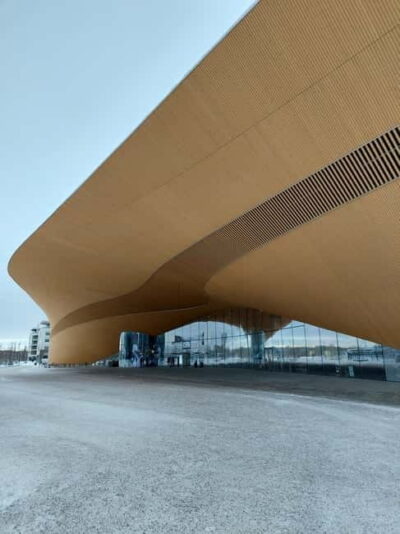
Then the tour ends at Oodi Central Library. This is where Helsinki shows off a modern public space concept: a place that is not only books, but also community and views. You get a chance to appreciate the sightlines toward the Parliament and nearby landmarks, including Finlandia Concert Hall and the National Museum area.
If you want a practical reason to choose this tour, it is the ending location. Oodi is a natural spot to grab coffee after the walk, and it is described as a convenient place to do exactly that.
How the route customization actually helps your trip
One of the best parts of this kind of private walking tour is simple: you can steer it. The tour is built for you to choose. Your guide can adjust the route to include preferred attractions, within the overall timeline.
That flexibility matters most when you have a specific priority, like churches you want to see first, a particular neighborhood vibe, or food focus. The guide also shares a list of Helsinki tips, so even if you do not change much, you still leave with a plan.
The pacing also gives you room for questions. With a private setup, you can ask why a building looks different, why certain traditions matter, or what you should do next based on your schedule.
Price and value: is $105.34 per person fair for what you get?
At $105.34 per person, you are paying for three things: a professional guide, a private walking format, and a set of saved decisions. You are not just buying views, you are buying interpretation and time efficiency.
Most stops on the route are free, which helps balance out the main extra expense: Helsinki Cathedral entrance. If you would otherwise pay for guided context or scramble to piece together a route, the guide’s knowledge can quickly justify the price.
You also get practical extras that feel small but add up. The included tip list, the personalized route, and the structure of seeing 19th, 20th, and 21st century Helsinki in one go can save you from spending your best vacation hours trying to figure it out.
One note on value: the itinerary moves at a steady clip, with short stops. If you like long museum time and slow photo sessions, you will want to tell your guide your preferred pace early so they can adjust what they spend time on.
Who this Helsinki walk suits best
This tour is a good fit if you want an efficient introduction to Helsinki and you like learning how places connect to real life. It is also designed to work for families, history-minded visitors, and people who want a little adventure without needing to plan every step.
It is especially good if:
- You want to cover big landmarks plus everyday market life in one outing
- You appreciate contrasts, like Lutheran vs Russian Orthodox architecture
- You enjoy getting local food and next-step ideas, not just photos
It may be less ideal if you want to stay inside buildings for long stretches. The schedule is built around walking and short visits, and only one major entrance fee is flagged as not included.
Should you book this private walk through centuries in Helsinki?
Book it if you want a smart, guided route that helps you see the city instead of just passing through it. I like this approach for first-time Helsinki trips because it gives you immediate orientation, then hands you a usable tip list so your remaining time feels planned.
Skip it or adjust your expectations if you are on a Monday and you do not want to risk changes related to Uspenski Cathedral. Also budget for Helsinki Cathedral entrance, which is an extra cost you should plan for.
If you care about guide quality, this is one of the strongest points. Tatiana is specifically described as kind, helpful, and professional, and that kind of guidance is what turns a collection of landmarks into a story you can follow.
FAQ
How long is the Private Walk Through Centuries in Helsinki?
It lasts about 2 to 3 hours.
Is this tour private?
Yes. It is a private tour/activity, so only your group participates.
Where does the tour start and where does it end?
It starts at Senate Square, 00170 Helsinki and ends at Helsinki Central Library Oodi, Töölönlahdenkatu 4, 00100 Helsinki.
Is pickup offered?
Pickup is offered. You can also meet at Senate Square, or request a different arrangement.
Is Helsinki Cathedral entrance included in the price?
No. Helsinki Cathedral entrance is not included, and the entrance fee listed is 10 euros.
Does the tour use a mobile ticket?
Yes, it includes a mobile ticket.
Can the route be adjusted to my interests?
Yes. The guide can adjust the route to include your preferred attractions.
Is Uspenski Cathedral open every day?
No. Uspenski Cathedral is closed on Mondays.
Is free cancellation available?
Yes. You can cancel for a full refund up to 24 hours in advance of the experience’s start time.
Fresh tracks out of Helsinki
- Helsinki: Capture the most Photogenic Spots with a Local
★ 5.0 · 1 review - Airport Transfer Helsinki Center
★ 5.0 · 1 review - Helsinki Old Town Tour with Archipelago Boat Cruise Tickets
★ 5.0 · 1 review - VIP Highlights Helsinki City PRIVATE Tour
★ 5.0 · 1 review - Electric Moto Adventure from Helsinki to Nuuksio National Park
★ 5.0 · 1 review - Private VIP Guided Helsinki City Tour
★ 5.0 · 1 review - Capital of Contrasts: A Self Guided Audio Tour in Helsinki
★ 5.0 · 1 review
Guided Walks in Helsinki, compared.




Small-Group Walking Tour with City Planner Guide
Read our review →
Browse the lists this tour appears in