
Ice fishing in Lapland feels oddly calm. I love the small-group pace and the hands-on help from guide Mathilde as you learn traditional fishing the Sami way. I also like that you can cook what you catch over a wood fire in a typical kota, then ride through quiet Lapland afterward. One catch to consider: fish luck varies, and in darker or less active conditions you may come back empty-handed.
You also get the kind of place that makes the whole experience click. This happens in the Muotkatunturi Wilderness Area, with no light pollution and almost no roads, so even the journey feels like you stepped off the map. The group limit (up to 8 people) keeps things personal, especially when you have questions about gear, technique, or local life.
Finally, it is a winter outing built for comfort and confidence. You do not need to be athletic, and you get cold-weather outerwear plus the fishing tools and sled transport, but you still need to wear solid base layers and warm shoes.
In This Review
- Key things to know before you go
- Muotkatunturi Park and the Muotkan Ruoktu starting point
- The 2-hour rhythm: sleigh, lake, and a warm kota moment
- Ice fishing on reindeer skin: what you actually do
- Coffee, cookies, and the hands-on gear bundle
- Sami traditions with a real local voice, plus your questions
- The sleigh ride through wild Lapland, and possible night skies
- Price and value at about $117 per person
- Weather reality: how to dress so the day stays enjoyable
- Who this tour is best for
- Should you book Muotkantunturi Park ice fishing and sleigh ride?
- FAQ
- Where is the meeting point for the tour?
- How long is the experience?
- How big are the groups?
- What languages is the live guide available in?
- What is included in the price?
- Do I need to bring my own fishing gear or clothing?
- Is the ice fishing activity difficult?
- Is catching fish guaranteed?
- What should I wear in Lapland winter?
- What happens if weather is extreme?
Key things to know before you go
- Sami-style intro to ice fishing, including drilling through the ice and sitting on reindeer skins
- Small group up to 8, so technique coaching feels practical, not rushed
- A kota cooking moment, so your catch is not just an outcome, it is part of the ritual
- Wooden sleigh ride through Muotkatunturi Park, where the silence is the point
- Coffee, tea, and local cookies to keep your hands steady and your mood warm
Muotkatunturi Park and the Muotkan Ruoktu starting point
This tour starts in Muotkan Ruoktu, right on Route 92, the road people use when they head toward Nordkapp. When you arrive, check in at the restaurant reception area. The activity begins right next to reception, but you can wait inside where it is warm, which is a small detail that matters a lot in Lapland winter.
From there, you are heading into Muotkatunturi Nature Park and the preserved Muotkatunturi Wilderness Area. The big practical benefit is the setting itself: it is away from crowds and away from city glow. That is why the day feels like more than a quick activity. Even before you touch the ice, the ride through snow-covered forests and valleys gives you that far-North stillness you came for.
If you are the type who likes structure, you are in good shape. The experience is designed to be gentle and accessible, with personalized support from the start. That matters on an activity like ice fishing, where it is easy to feel awkward if nobody explains the basics.
The 2-hour rhythm: sleigh, lake, and a warm kota moment
The whole experience is about 2 hours, which is a smart length for winter. Long enough to learn something real, short enough that you are not spending your day freezing in layers.
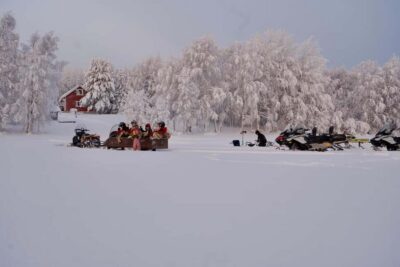
Your day begins aboard a traditional wooden sled, the kind Sami families have used to travel across snow to the tundra and care for reindeer. You glide through snow-covered forests and valleys around the Tunturi hills area. This is not a thrill ride, it is more like time slowing down. You get space to look around, breathe, and settle in before fishing.
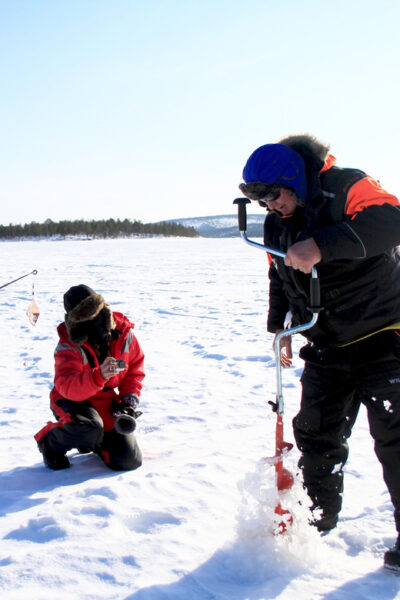
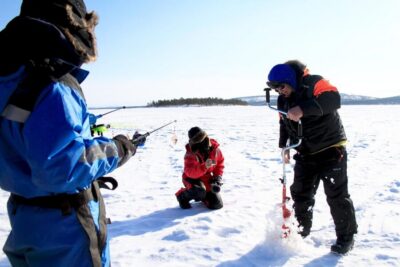
Once you reach the frozen lake, the timing shifts from scenery to technique. This is where your guide takes you step by step, teaching you how to pierce the ice, where to set up, and how to sit comfortably while you fish. You also get rods, hooks, an auger, and reindeer skins for sitting, so you are not improvising.
Then you get the warm payoff. If you catch fish, you can prepare it over a wood fire in a typical kota. That kota moment is the heart of the value here, because it turns cold waiting into something with a clear purpose and a cozy reward.
More Ice Fishing Trips in Saariselkä
Ice fishing on reindeer skin: what you actually do
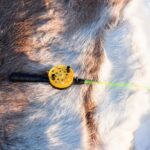
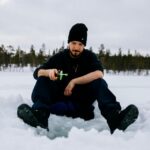
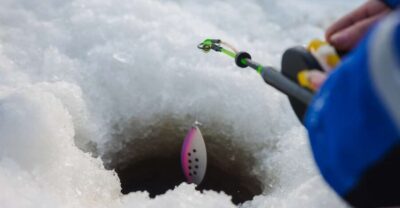
Ice fishing is one of those Arctic traditions that sounds simple until you try it. Here, it is taught in a way that makes it approachable. You learn how to pierce the ice and how to set up your fishing line. Then you sit on a reindeer skin, using a small rod with a shiny hook.
The key skill is patience. Your guide shares tips on technique and helps you understand what to do while you are waiting. That coaching is especially useful if it is your first time with ice fishing, because you are not just watching a hole. You are learning how to behave near the ice, how to manage your comfort, and how to stay focused.
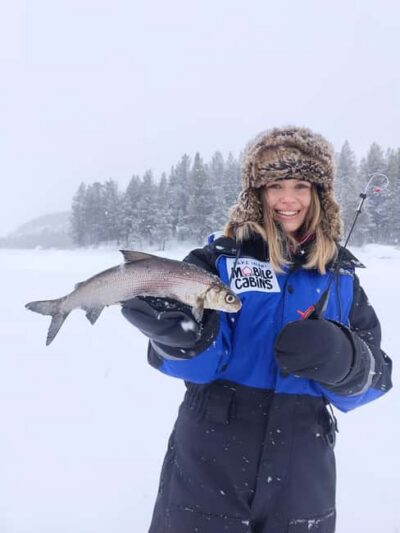
Also, do not expect miracles on demand. Fish activity depends on conditions, and the day can influence whether you actually get a bite. One traveler experience pointed out that fish can be less likely to show up in certain parts of the day when it gets darker. So if you are planning mainly for the goal of catching fish, choose your timing thoughtfully when booking.
Still, even if you catch nothing, the learning part is real. You walk away knowing how the setup works and how people fish on frozen lakes as an everyday winter practice.
Coffee, cookies, and the hands-on gear bundle
One reason this tour feels good value is that it treats comfort and success like they matter. You get fishing gear including rods, hooks, an auger, and reindeer skins. You also get cold-weather clothing and support for fishing techniques, so you are not stuck in thick clothes that limit movement.
On top of that, you get coffee, tea, and local cookies during the tour. That is a small thing, but it helps you stay warm enough to focus. When your hands are steady and your body is not shivering, ice fishing stops feeling like a test and starts feeling like an activity.
The gear bundle also reduces friction. You do not need to figure out what auger you need, how reindeer skin seating works, or how you would keep everything dry. The tour handles the equipment, then your guide handles the how-to. That split is exactly what makes a winter activity work for beginners and families.
Sami traditions with a real local voice, plus your questions
This is not just an activity on a lake. You are introduced to Sami traditions and Arctic life through your guide. The tone is friendly and warm, and it is clear the guide genuinely enjoys sharing local knowledge.
In practice, the learning experience depends on how you interact. If you want deeper culture talk, ask direct questions. One point that stood out from an experience was that guests would have liked more Sami cultural detail without having to prompt. So if Sami history, reindeer life, or winter routines interest you, bring a few questions, even simple ones like how people lived this way and what changed over time.
The guide adds a human layer too. In one experience, the guide’s energy made the whole outing feel extra special, and there was even mention of hot chocolate under the stars. That kind of warmth is not just friendliness, it is what turns a practical lesson into a memory.
More holes drilled through lake ice:
- Snowshoe Trip for Ice Fishing in Saariselka★ 4.8 · 22 reviews
- Saariselkä: Ice Fishing Safari by Snowmobile★ 4.9 · 21 reviews
- Saariselkä: Arctic Ice Fishing Experience★ 4.3 · 18 reviews
- From Saariselkä: Ice Fishing Tour to Lake Inari, reindeers &lunch★ 4.5 · 8 reviews
The sleigh ride through wild Lapland, and possible night skies
After fishing, you ride back by traditional sleigh. That return matters. It is not just transportation, it is your chance to soak in the environment with less pressure on your brain. You can watch the snow drift by, feel the quiet, and notice how the park looks different once you have done something on the ice.
On nights with good conditions, the Arctic sky can add a bonus. One traveler managed to spot the aurora while fishing, which suggests it can show up at the right time. Even if you do not catch it, the darkness and stillness are part of Lapland’s magic.
If you are traveling for the lights, you should still keep your expectations flexible. Weather and timing control what you can see. But the setting has the right ingredients, including minimal light pollution.
Price and value at about $117 per person
At around $117 per person for a 2-hour outing, you are paying for more than fishing. You are paying for a guide, a remote location, the full gear kit, warm outerwear, and the cultural explanation, plus the option to cook your catch in a kota.
What makes the value feel real is that most of the costs that add up on your own are handled here:
- Cold-weather clothing and sled transport
- Ice fishing tools and reindeer skin seating
- Coffee, tea, and local cookies
- Active coaching for how to fish
If you tried to copy this independently, you would likely spend money on equipment rentals, transport to a remote spot, and an expert who can explain safety and technique. Even then, you would still miss the kota cooking experience, which is part practical and part memorable.
That said, fish success is not guaranteed. You should treat catching fish as a bonus. The main value is learning traditional ice fishing in a protected, off-the-grid park, then enjoying a warm, local-style cooking moment when conditions allow.
Weather reality: how to dress so the day stays enjoyable
Lapland winter can change fast, and this tour is built with that in mind. The experience notes that in extreme conditions it may be modified or canceled with a full refund. Translation: you will not be pushed to suffer for the sake of the schedule.
Still, your clothing choices control your comfort. Bring warm clothing and warm shoes. Pack thermal underwear, fleece, and warm socks, and wear a proper base layer since the tour provides outerwear but not the whole layering system.
A practical approach is to dress like you are going to be standing still for a while. Ice fishing keeps you in one place, and the sleigh ride can be chilly depending on wind. If you run cold easily, bring extra layers for your core and hands, as cold hands are the fastest way to lose focus.
Who this tour is best for
This is one of those rare winter activities that works for many travel styles.
I would point it toward:
- Families with kids who want a safe, gentle winter experience with clear instruction
- Couples looking for a romantic winter setting, especially if the skies cooperate
- Solo travelers who want a small group and a knowledgeable guide, not a crowded bus tour
- First-timers in Lapland who want an authentic activity without needing expertise
If your priority is catching fish no matter what, set that goal lightly. Ice conditions and time of day can influence bites. But if your priority is learning the tradition, being outside in a preserved natural area, and enjoying a warm kota moment, this fits well.
Should you book Muotkantunturi Park ice fishing and sleigh ride?
I think you should book if you want an off-the-grid Lapland experience that is taught by a local enthusiast and paced for humans, not athletic fitness. The small group format, the Sami-style wooden sleigh, and the chance to cook your catch over a wood fire in a kota add real texture for the price.
I would hesitate if you are purely chasing guaranteed fish or if you only want culture facts delivered in a lecture format. This is hands-on learning, and if you want extra Sami cultural depth, you will get more from asking questions than waiting for the guide to guess what you care about.
Bottom line: this is a solid choice for authentic winter time in Muotkatunturi Wilderness Area, especially if you want both an activity and a warm payoff.
FAQ
Where is the meeting point for the tour?
The meeting point is Muotkan Ruoktu, located right on Route 92, the road to Nordkapp. Check in at the restaurant reception area.
How long is the experience?
The tour lasts 2 hours.
How big are the groups?
It is a small group experience limited to 8 participants.
What languages is the live guide available in?
The live tour guide offers French, English, Polish, Spanish, and Italian.
What is included in the price?
The tour includes a traditional wooden sleigh ride, an experienced guide, ice fishing gear (rods, hooks, auger, reindeer skins), coffee, tea, and local cookies, learning about Sami traditions, and support for ice fishing techniques. You can also prepare your catch in a traditional kota.
Do I need to bring my own fishing gear or clothing?
No fishing gear is provided by the tour. You should bring warm clothing and warm shoes, and you should bring your own warm base layers since the tour provides outerwear.
Is the ice fishing activity difficult?
The activity is described as easy and accessible to all levels, including families with kids.
Is catching fish guaranteed?
The information provided does not promise a catch, and outcomes can depend on conditions. You may or may not catch fish during your time at the frozen lake.
What should I wear in Lapland winter?
Dress warmly with winter-appropriate clothing, including thermal underwear, fleece, and warm socks. Warm shoes are also recommended.
What happens if weather is extreme?
The tour notes that in extreme conditions the activity may be modified or canceled, and you would receive a full refund.
If you want, tell me your travel dates and whether you care more about catching fish or seeing the Northern Lights, and I can suggest how to prioritize timing and layering.
Cold-Water Catches
Fresh tracks out of Saariselka
- Evening Snowmobile Safari with Campfire in Saariselkä
★ 5.0 · 1 review - Ivalo: Lapland Unplugged, An Authentic Wilderness Immersion
★ 5.0 · 1 review - Muotkantunturi Park, Inari – Arctic Ski Exploration Hike
★ 5.0 · 1 review - Muotkantunturi Park, Inari – Mini snowshoe expedition
★ 5.0 · 1 review - Rent Winter Clothing in Saariselkä and Ivalo All Sizes and Ages
★ 5.0 · 1 review - Get Known with Cross Country Skiing Experience in Saariselkä
★ 5.0 · 1 review - Saariselkä kakslauttanen: Ice Fishing Experience + barbecue
★ 5.0 · 1 review
Ice Fishing Excursions, compared.
Snowmobile and Ice Fishing Adventure with Lunch
Read our review →
Snowmobile Safari with Ice Fishing and Outdoor Lunch
Read our review →
Browse the lists this tour appears in