
Reviewed · SUOMENLINNA FORTRESS TOURS
Helsinki’s Island Fortress: An Audio Tour of Suomenlinna
The walk starts with a fortress in the middle of the sea. Suomenlinna is one of the world’s biggest sea fortresses, spread across six small islands, and this audio tour turns the sightscapes into a clear, paced storyline. You’ll follow a self-guided GPS route with offline audio, so you can keep moving without needing data or constant screen time.
I especially liked how the stops connect buildings to real events, not just names and dates. The commentary also makes room for a quick Finland fun fact along the way, like how there are more saunas than cars in Finland.
Two standouts for me: the audio makes key locations easy to recognize, like the Jetty Barracks and the Suomenlinna Church, and it points you toward the big memorial moments without rushing. I also like that the tour is built for your pace, so if you want extra time at the grave in the Great Courtyard, you can take it.
If you care about how a fortress works and how people lived inside it, this format is a good fit.
One drawback to consider: you’ll hear plenty of military terms, and the narration may not slow down to define every 19th-century fortification word. If that vocabulary is new to you, plan to pause when a term sounds confusing, and let the next few minutes give you context instead of trying to catch everything at once.
In This Review
- Key highlights to look for
- Suomenlinna is easiest when the audio does the steering
- Six islands, one fortress story: how the route hangs together
- Jetty Barracks: built for 250 soldiers, explained in a walkable way
- Suomenlinna Church: garrison faith, then a new role
- Great Courtyard and Augustin Ehrensvärd’s grave
- Mortuis Memorial Stone, Manes Military Museum, and the 8,000-prisoner memorial
- King’s Gate in 1752 and the bastions on the outer ring
- Vesikko submarine: WWII hardware with a Helsinki connection
- The audio tech that makes the walk actually work
- Price and value: what $11.99 buys you in time and meaning
- Who should book this, and who might want something else
- Should you book Helsinki’s Island Fortress audio tour of Suomenlinna?
- FAQ
- How long is the Helsinki’s Island Fortress audio tour?
- How much does the audio tour cost?
- Where does the tour start, and where does it end?
- Do I need my own smartphone and headphones?
- Is this a live guided tour?
- What is included in the price, and what is not?
Key highlights to look for
- Jetty Barracks with the peacetime plan for 250 soldiers, explained in plain walking-route context
- Suomenlinna Church moving from Orthodox garrison use to Evangelical-Lutheran worship
- Augustin Ehrensvärd’s grave in the Great Courtyard, tied to his mission during wartime
- 1918 Prisoner-of-War Camp Memorial, marking the spot where 8,000 prisoners were held
- King’s Gate (1752) and the story of King Adolf Frederick’s first walk through it
- Vesikko submarine, launched from Turku and used during World War II
Suomenlinna is easiest when the audio does the steering
Suomenlinna sits off Helsinki on a chain of six islands, which means you get waterfront views plus frequent stops to orient yourself. That is exactly where an audio route shines. You are not trying to read a map while crossing bridges and walking along bastions, you are following a sequence of listening points and landmarks that make sense as you go.
This is not a “drive-by” tour. It is a walking experience designed for about 2 to 3 hours, which is a sweet spot. Long enough to feel the place, short enough that you are not trapped on the islands all afternoon.
The tour format also keeps it practical. You get directions to the starting point so you can start listening in the right place, and you can use offline access for the audio, maps, and geodata. That matters in a place where mobile coverage can be spotty depending on where you are standing.
If you want a self-paced way to understand a fortress, you’ll like this. If you want a live guide answering questions on the spot, you might find the audio-only format limiting.
Six islands, one fortress story: how the route hangs together

The key idea here is that Suomenlinna is not one single building. It sprawls, and it changes as you move from one island to the next. A good fortress walkthrough helps you “read” the site as a whole, and that is what this tour tries to do.
The audio tour guides you past major defensive parts of the complex, including bastions in the outer ring of defenses. It also brings you to sites that represent daily life and command, like courtyards and churches. And it does not skip the darkest parts either, including a memorial marking the prisoner-of-war camp of 1918.
Because it is GPS self-guided, you do not have to memorize a map before you go. You also do not need to hold your phone in your face the whole time, since you can keep listening like an audiobook. If you take even a little time to look up between listening points, the fortress architecture starts to make sense fast.
Practical tip: plan your pace before you start. If you listen at normal speed, you’ll likely finish in the 2 to 3 hour window. If you stop for photos often, you can stretch it. Either way, staying on the route is what makes the story connect from stop to stop.
More ramparts out on Suomenlinna:
Jetty Barracks: built for 250 soldiers, explained in a walkable way
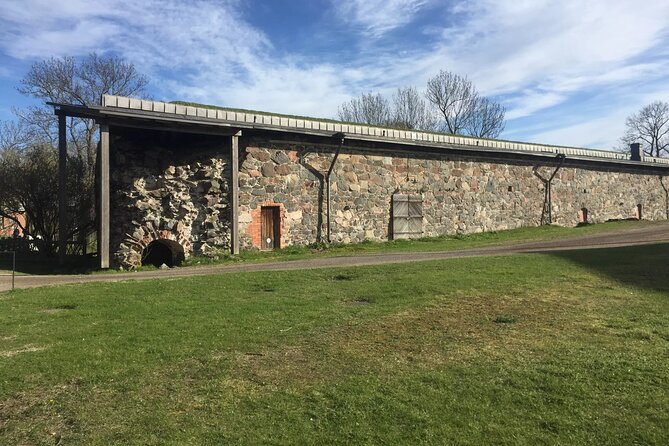
One of the first “oh, that’s what this is” stops is the Jetty Barracks. The narration highlights that this barracks design was meant to house 250 soldiers in peacetime. That single detail does a lot of work for you as a visitor.
It reframes the building. You stop seeing it as just stone walls and start imagining daily movement, routines, and how many people might have been living and working there when things were calm. Then, when the tour later touches on wartime themes, you can feel the contrast more clearly.
A likely benefit of an audio stop here is timing. You will be in the right place to understand why the location matters, instead of reading about it later and not remembering which structure was which. And since the tour is designed as a walking sequence, you can connect Jetty Barracks to nearby defenses without getting lost.
A small consideration: if you are the type who wants museum-style interpretation panels explained word for word, an audio tour may feel lighter on detail. Still, for orientation and story, it works well.
Suomenlinna Church: garrison faith, then a new role
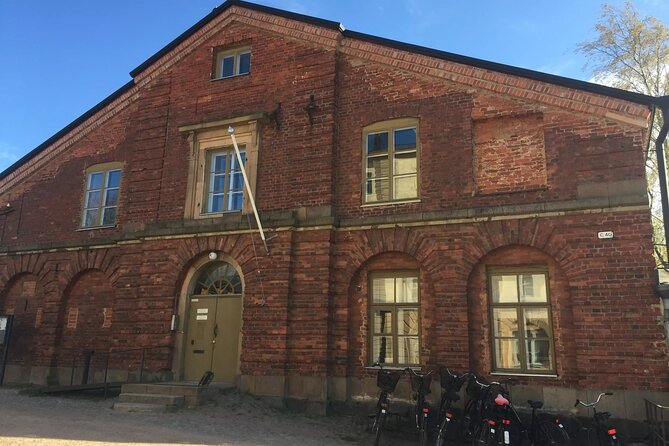
The tour also brings you to Suomenlinna Church, and it frames the building through a real life shift. The church was once an Orthodox garrison church, and it is now an Evangelical-Lutheran church.
That kind of change matters in a fortress setting. A sea fortress is not only defenses and drills. It also has to support everyday needs, including worship for the people stationed there. Hearing the transition gives you a different lens for the architecture. You can look at the church and think, this is where a community met, regardless of the broader politics changing around them.
This is the type of stop where audio helps because churches can look similar at first glance. The narration steers your attention to what makes this one distinct, so you do not just pass by it on the way to the next bastion.
If you like buildings with a second life, you’ll enjoy this part. If you only care about military engineering, you might still appreciate it because it rounds out the human side of the fort.
Great Courtyard and Augustin Ehrensvärd’s grave
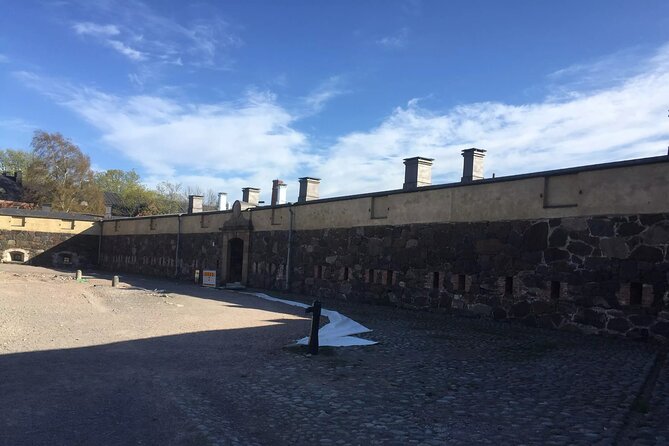
In the Great Courtyard, the tour points you to Augustin Ehrensvärd’s grave, and the listening moment ties his wartime mission to improving the artillery’s capacity. Even without turning the courtyard into a lecture, the audio gives you a clear reason to care about the place.
Courtyards in fortresses are rarely decorative. They are where people gather, wait, train, and process orders. A grave inside that space adds a strong emotional layer. You feel how command and memory are physically embedded in the everyday geometry of the fortress.
This is also a helpful pause point. If you use the tour as a pacing tool, the courtyard can be where you slow down. Look around, take a breather, and then continue onto the more somber memorial stops later in the route.
One small caution: audio tours move at your speed, but you can still miss details if you are charging ahead. Give the courtyard a minute, and then let the next listening point pull you forward.
What the guides in Helsinki point to next
- Helsinki: Sightseeing Canal Cruise with Audio Commentary★ 4.5 · 1,299 reviews
- Helsinki: Bus Tour with Audio Guide★ 4.3 · 544 reviews
- Helsinki Panorama Sightseeing Audio-Guided Bus Tour★ 4.0 · 72 reviews
- Helsinki Self-Guided Audio Tour★ 3.5 · 14 reviews
Mortuis Memorial Stone, Manes Military Museum, and the 8,000-prisoner memorial

The route does not treat the fortress as only a scenic history site. It makes room for the harsh reality of imprisonment during conflict.
As you continue, you’ll encounter the Mortuis Memorial Stone and the Military Museum of Manes. The tour then includes the 1918 Prisoner-of-War Camp Memorial, which marks the spot where 8,000 prisons were held. That phrasing lands hard for a reason. It turns a wide site into a specific location where suffering took place.
For me, the value here is that the audio does not hide behind vague atmosphere. It points you at named memorial sites and gives you enough context to understand what you are looking at while you are actually standing there.
If you want a balanced experience, this is it. You get engineering, faith, and command, but you also get a clear reminder that fortresses are tied to conflict. And because you are walking, the memorial moments feel grounded instead of like something you scroll past later.
Possible drawback: the narration includes military context, and this stretch is likely where you will hear the most terms and references tied to the wider conflict. If you are new to 19th-century fort construction or wartime language, slow down and let the audio catch up with the setting.
King’s Gate in 1752 and the bastions on the outer ring
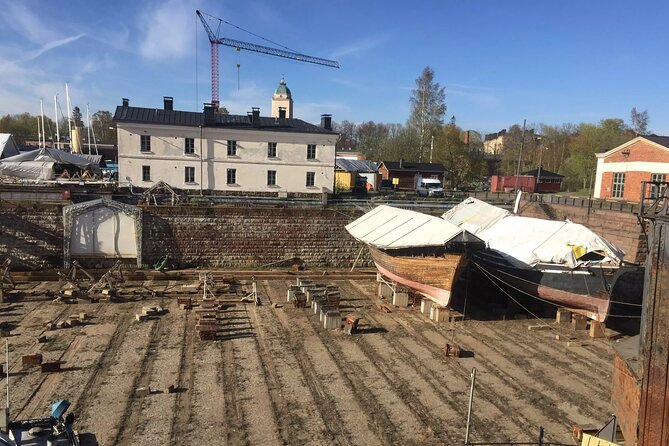
One of the more story-driven parts of the walk is the King’s Gate. The audio reenacts King Adolf Frederick’s first time walking through the King’s Gate in 1752. That is a clever approach, because it gives you a human timeline you can picture, rather than treating the gate as just another pass-through.
Then you move outward to several bastions, including Gyllenborg Bastion and Bastion Hårleman, part of the fortress’s outer ring of defenses. This section is where you start to see how a fortress keeps threats at bay. Bastions are not random points on a map. They are functional platforms in a larger defensive system.
If you are the kind of visitor who likes to “read” how a structure works, you’ll enjoy how the audio keeps pointing your attention back to the defensive logic. And if you’re more casual, the narration still helps because it gives you a reason to stop and look at the shapes and positions around you.
Consideration: if you prefer short, snackable facts only, this part might feel heavier. It is still designed for a walk, not a book, but the site itself is complex. Take breaks if you feel yourself speeding up.
Vesikko submarine: WWII hardware with a Helsinki connection
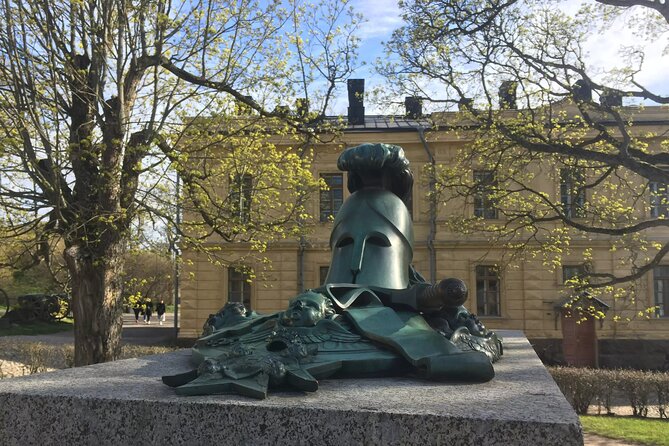
The tour also includes the submarine Vesikko. You learn that it was launched from the Crichton-Vulcan dock in Turku and that it was used during World War II.
This stop gives you a useful link beyond Suomenlinna itself. The fortress story is tied to the sea, and a submarine connects the defensive network to the wider Finnish wartime story. You also get a sense that fortresses are not isolated islands of stone and sandbags. They are part of a larger toolkit.
Even if you are not a naval-history person, the audio format helps you understand why this matters in context. You are not just hearing about a vessel, you are seeing how a fortress setting could connect to submarines and sea strategy.
One practical note: because this is an audio experience, your enjoyment will depend on having headphones working well. Bring your own smartphone and headphones as the tour requires them.
The audio tech that makes the walk actually work
This experience is run by VoiceMap Audio Tours, and it is built around a few practical features that you will feel right away while walking.
You get a virtual playback option, so you can listen like an audiobook from anywhere. That is handy if you want to preview the vibe before you start walking, or if you want to keep your place during travel breaks.
You also get unlimited lifetime use of the tour, both before your booking date and after it. That flexibility is real value. If you finish the route and want to revisit certain stops, you can. If weather changes your schedule, you can often shift your listening time without starting from scratch.
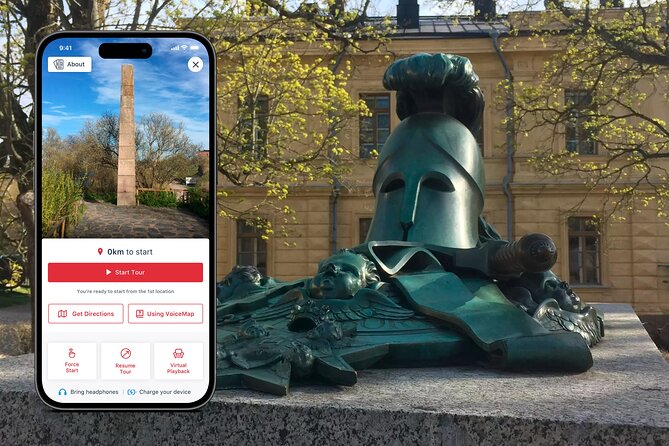
Offline access is one of the biggest wins. Audio, maps, and geodata work without needing cell service. On islands, that can be the difference between a smooth day and a constantly loading mess.
It is also described as a private activity, meaning only your group participates. That typically translates into less disruption from other groups and a calmer walking pace.
Price and value: what $11.99 buys you in time and meaning
At $11.99 per person, this tour is priced like a budget-friendly “wayfinding plus story” add-on. You are not paying for museum admissions or guided staff, you are paying for an audio route that helps you interpret the site while you are there.
The duration, about 2 to 3 hours, is important for value. That is enough time to make the fortress feel coherent, not just a list of stops you barely remember. If you normally spend an hour on a scenic attraction and then bounce, you might find this nudges you into a deeper visit without consuming half your day.
Also, the tour includes directions to the starting point and the listening experience stays with you via offline access. If you plan to walk anyway, the cost feels like it is covering the interpretation and the route assistance, not transportation or entrances.
What you should know: museum tickets or entrance fees are not included, and food and drink are not included either. So plan to budget separately if you decide to go inside any attractions you encounter.
If you want a low-cost way to understand Suomenlinna instead of just photographing it, this price is pretty fair.
Who should book this, and who might want something else
This audio tour is a strong match if you want a self-guided walk with structure. You like history that you can actually see, and you prefer moving at your own pace instead of being pulled along by a schedule.
It also fits well if you travel with limited time. A 2 to 3 hour window on Suomenlinna can give you a meaningful overview, especially if your priority is understanding major landmarks like the barracks, the church, the courtyards, and the memorial sites.
Who might not love it: if you want a lot of definitions for specialized military terms, you may have to work a little. Based on feedback, some military vocabulary might not be fully defined on the spot. If that kind of detail frustrates you, consider pairing the audio with a quick skim of a simple glossary before you start.
Also, this requires your own smartphone and headphones. If you forget them, you can’t really use the experience.
Should you book Helsinki’s Island Fortress audio tour of Suomenlinna?
Yes, I think it is worth booking if you want a clear, walkable way to understand Suomenlinna without paying for museum tickets or joining a timed group. The route hits meaningful landmarks, including the Jetty Barracks, Suomenlinna Church, the Great Courtyard with Augustin Ehrensvärd’s grave, and the memorial for the 1918 prisoner-of-war camp where 8,000 were held.
Book it if you like learning as you walk, and especially if you value offline audio and GPS navigation. At $11.99, you are paying for interpretation plus a practical way to connect the dots across six islands.
Skip or rethink it if you need a lot of live explanation for military terms, or if you prefer a guided format with an expert answering questions. In that case, you might want a live tour instead.
If you do book, bring headphones, give yourself 2 to 3 hours, and let the story guide your footsteps. Suomenlinna rewards that kind of attention.
FAQ
How long is the Helsinki’s Island Fortress audio tour?
The tour takes about 2 to 3 hours.
How much does the audio tour cost?
It costs $11.99 per person.
Where does the tour start, and where does it end?
It starts at Suomenlinna, päälait 00190 Helsinki, Finland, and ends back at the meeting point.
Do I need my own smartphone and headphones?
Yes. The tour requires your own smartphone and headphones.
Is this a live guided tour?
No. It is a self-guided GPS audio tour. It is also described as private, meaning only your group participates.
What is included in the price, and what is not?
Included are directions to the starting point, unlimited lifetime use of the tour (before and after your booking date), virtual playback, self-guided GPS flexibility, and offline access to audio, maps, and geodata. Not included are transportation, food and drink, smartphone and headphones, and any museum or other attraction tickets.
More Self-Guided Tours in Helsinki



Fresh tracks out of Helsinki
- Helsinki: Capture the most Photogenic Spots with a Local
★ 5.0 · 1 review - Airport Transfer Helsinki Center
★ 5.0 · 1 review - VIP Highlights Helsinki City PRIVATE Tour
★ 5.0 · 1 review - Helsinki Old Town Tour with Archipelago Boat Cruise Tickets
★ 5.0 · 1 review - Electric Moto Adventure from Helsinki to Nuuksio National Park
★ 5.0 · 1 review - Private VIP Guided Helsinki City Tour
★ 5.0 · 1 review - Capital of Contrasts: A Self Guided Audio Tour in Helsinki
★ 5.0 · 1 review
Suomenlinna Fortress Tours, compared.



Suomenlinna: Guided Walking Tour with an Authorized Guide
Read our review →

Helsinki & Suomenlinna: City Highlights Tour with Ferry Ride
Read our review →
Helsinki in Nutshell: Suomenlinna & City Highlights by Eco-Friendly Ways
Read our review →Helsinki & Suomenlinna: City Highlights Tour with Ferry Ride
Read our review →
Browse the lists this tour appears in