

Reviewed · GUIDED WALKS IN HELSINKI
Helsinki Walking Tour with a Sociologist
Helsinki clicks faster with a social-science lens. This 3-hour walking tour is led by a PhD student in Sociology and a local guide, so you are not just ticking off sights, you are learning how places shape daily life. I especially like the small group size (max 6) because the conversation stays real, not a one-way lecture.
One thing to plan for: it is a 5 to 6 km walk on mostly outdoor streets, so you will want comfortable shoes and weather-ready clothes.
I like that the route blends well-known icons with day-to-day institutions, like libraries, markets, theatres, and public spaces. The tone is practical too, you get a strong orientation so you can explore the rest of Helsinki with better instincts. The only potential drawback is that if you are craving lots of funny anecdotes or personal storytelling, this tour may feel more structured and interpretive than strictly chatty.
In This Review
- Key highlights worth your attention
- Why a sociologist guides this Helsinki walk
- Is $56 a fair price for a 3-hour, 6-person tour?
- Starting at Fazer Cafe, then powering toward Senate Square
- Libraries and the city’s public face: National Library, Oodi, and the Palace
- Uspenski Cathedral, Allas Sea Pool, and the Market Square reality check
- Theatre and culture route: Swedish Theatre, Kappeli, Finnish National Theatre, Musiikkitalo
- Runeberg monument, Ateneum, and the City Museum context layer
- Central Station to Oodi, finishing with the city’s modern gathering spot
- Who this tour fits best, and who should skip it
- Should you book this Helsinki sociologist-led walking tour?
- FAQ
- How long is the Helsinki Walking Tour with a Sociologist?
- How much does the tour cost?
- How many people are in a group?
- Where do I meet the guide?
- Where does the tour end?
- What sites are included on the walk?
- Is the tour in English?
- What should I bring?
- How far will I walk?
- Is this tour suitable for wheelchair users?
Key highlights worth your attention
- Sociology-first storytelling that connects buildings to social dynamics, not just dates and facts
- A tight group of 6 that makes it easier to ask questions and stay engaged
- Big landmarks plus working public spaces like markets, libraries, and cultural institutions
- A built-in orientation for the rest of Helsinki by the time you reach the finish at Oodi
- English guide clarity, with a consistent rhythm across the full 3 hours
Why a sociologist guides this Helsinki walk
Most Helsinki walking tours tell you what you are looking at. This one adds a second layer, why it matters. You are led by a PhD student in Sociology, and that lens shows up in how the guide talks about history and contemporary life at the same time.
I like that it is not trying to turn you into a scholar. It is still a walk with stops you recognize, but the guide keeps steering the conversation toward social patterns: who public spaces are for, how institutions present themselves, and how everyday life gets shaped by culture, language, and civic decisions.
You also get a local guide alongside the sociology angle. That combo matters. A local guide helps you understand Helsinki as a living city, while the sociologist helps you read what you see, not just admire it.
Is $56 a fair price for a 3-hour, 6-person tour?
At $56 per person for 3 hours, you are paying for two things: time with a specialist guide and a route that covers a lot of core downtown ground without you having to plan every turn. The small group cap of 6 participants is a big part of the value. In a smaller group, the guide can slow down when a question comes up, and you are less likely to get separated from the discussion.
You also get a clear return on effort. The tour is designed to give you a structured orientation for exploring after the walk, with key stops like Senate Square, major cathedrals, major libraries, central cultural venues, and Helsinki Central Station along the way.
One consideration: since the tour is still walking-heavy, the value depends on your willingness to move. If you prefer taxis, quick stops, and long cafés, this probably will not feel like your best use of time. If you like to see a city by feet, it is a strong deal.
More Guided Walks in Helsinki
Starting at Fazer Cafe, then powering toward Senate Square

The meeting point is in front of Fazer Café, and you start on Kluuvikatu. That is a smart warm-up. You are not dropped into the most crowded plaza first, you begin in a normal street setting, which makes it easier to settle in and get your bearings.
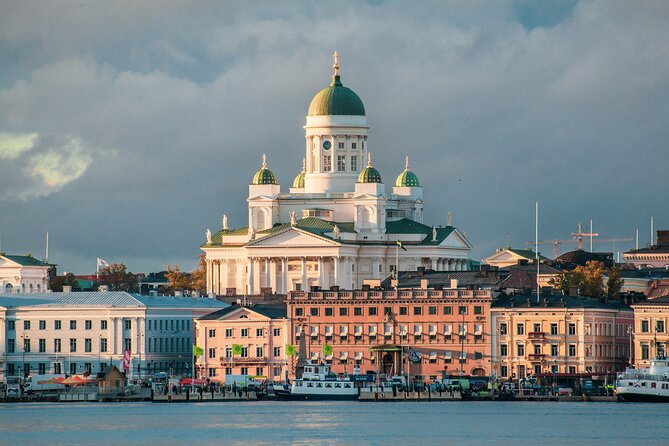
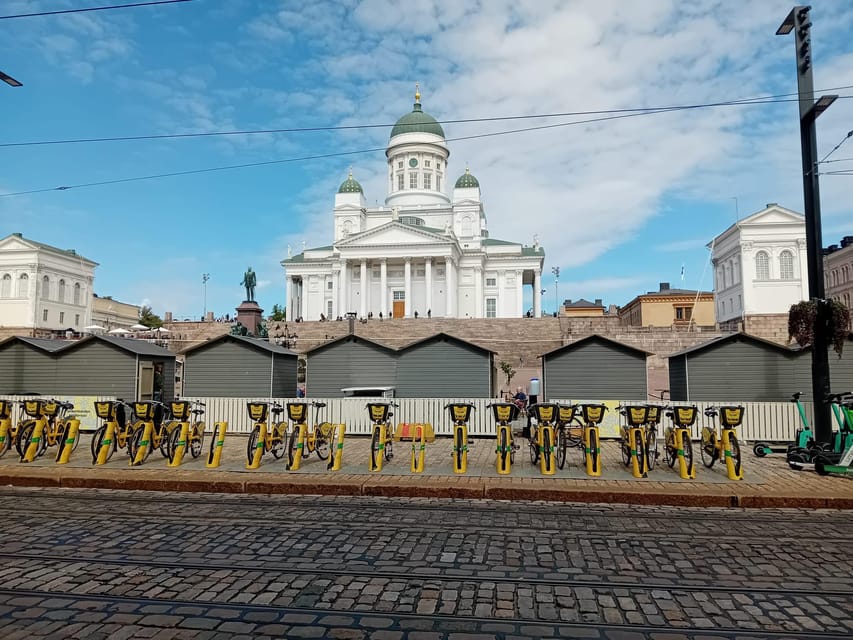
From there, you head to Senate Square for a short guided stop, then onto Helsinki Cathedral. Even with the time at each location kept fairly tight, you get a guided focus. The guide does not just point out the obvious landmark factor. They help you connect the square and cathedral to Helsinki’s ideas about civic identity and public symbolism, and then they compare that to what you see around you today.
Practical tip: at places like these, you will often see people taking photos and moving slowly. Wear shoes that handle uneven sidewalks and plan to stand patiently during the guide’s main points. That is part of the rhythm.
Libraries and the city’s public face: National Library, Oodi, and the Palace

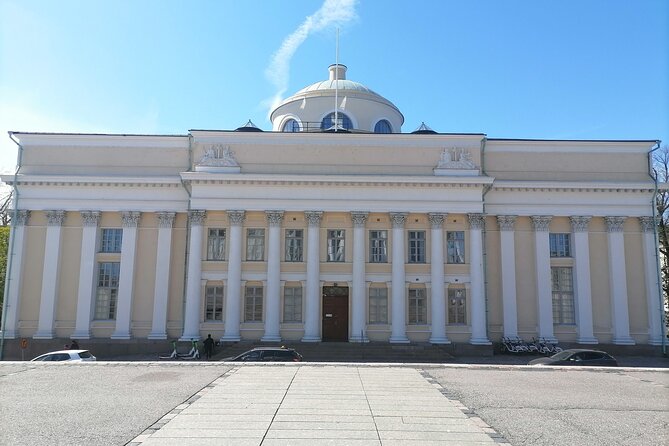
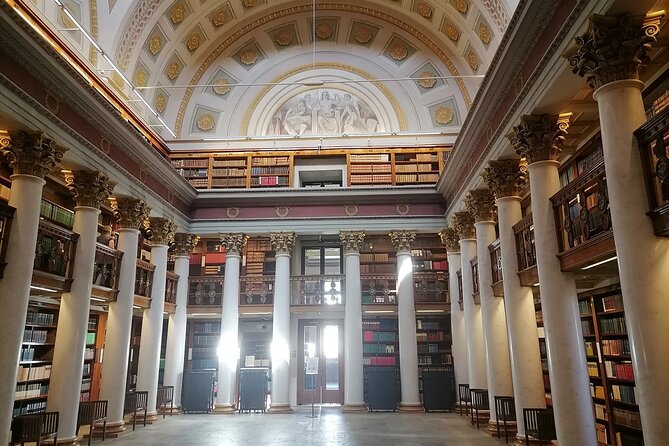
Next comes a theme shift into knowledge and public institutions. You visit the National Library of Finland and Helsinki Central Library Oodi (with guided time at both). Libraries sound quiet, but the sociologist angle makes them feel active. You are learning how public buildings communicate values, shape behavior, and gather people with different needs and backgrounds.
Then you move toward the seats of power with a stop at the President’s Palace and later Parliament House, Helsinki. Here, the tour tends to do something I find useful: it links formality to function. You are not only seeing prominent architecture, you are being nudged to think about what governance looks like in real streetscape.
There is also a political-cultural layer baked into Helsinki. The tour’s social dynamics framing means you may notice how public spaces reflect language and cultural history, especially across Finnish and Swedish spheres. You do not need to be an expert before you arrive, the guide is there to put it into plain language.
Uspenski Cathedral, Allas Sea Pool, and the Market Square reality check
If you want variety, this portion delivers. You get a stop at Uspenski Cathedral, then later you visit Allas Sea Pool and the Market Square and Market Hall.
This is where the tour often feels most like walking around like a local. Cathedrals give you one kind of historical signal, while a place like Allas Sea Pool gives you a different message. You are seeing how the city treats public life, leisure, and communal space. Even if you do not use the pool, it helps you understand Helsinki’s relationship with water and everyday hangouts.
Then comes the market stretch, Market Square, Helsinki and Market Hall, Helsinki. Markets are where sociology becomes visible without effort. You see how people shop, gather, and interact in a public setting. The guide uses these stops to frame contemporary social dynamics, not just nostalgia.
A drawback to be aware of: market areas can be active. If you are someone who hates crowds, you might find parts of this section a little more crowded than the library-and-theatre stretches. The tour keeps moving, but the area can feel busy depending on the day and weather.
More districts covered on foot:
- Helsinki: A Finntastic Walking Tour with a Local Guide★ 5.0 · 306 reviews
- Helsinki walking tour with a city planner★ 5.0 · 175 reviews
- Helsinki Walking Tour – Small Group★ 5.0 · 155 reviews
- Helsinki: Small-Group Walking Tour with City Planner Guide★ 5.0 · 91 reviews
Theatre and culture route: Swedish Theatre, Kappeli, Finnish National Theatre, Musiikkitalo

After the markets, the tour turns cultural in a very intentional way. You visit Swedish Theatre, then Kappeli, then Finnish National Theatre, and later Musiikkitalo.
What I like about this cluster is that it highlights how Helsinki carries culture in multiple forms. Theatre is not just entertainment here, it becomes a sign of identity and community. The guide’s sociology lens helps you connect these venues to social life, not just aesthetics.
You also get Kappeli, which keeps the route from becoming a straight line of monuments. It adds a lighter, everyday-feeling stop where you can observe how public settings invite people to linger. Then the walk returns to large institutions with the Finnish National Theatre and Musiikkitalo, so you get a sense of scale, style, and purpose across the arts scene.
If you are hoping for a tour that is packed with casual gossip and long personal stories, this is where you might notice the style. One guide-recommendation theme that came through in feedback is that the tour can be more about structure and analysis than sheer anecdote volume. That can still be great, but it is worth knowing your preference ahead of time.
Runeberg monument, Ateneum, and the City Museum context layer
Next, you head toward sites that pull the story into everyday cultural memory. You stop at Johan Ludvig Runeberg’s memorial, then later you visit Helsinki City Museum and Art Museum Ateneum.
A sociologist tends to treat monuments and museums as communication tools. They show what a city wants you to remember, and they also reflect who was centered in the past. Even without going deep into dates or names, you can walk away with a clearer sense of how Helsinki presents identity to residents and visitors.
You also stop at Fazer Café Sanomatalo during the route. It is a nice balance point. You get a change of pace without turning the tour into a food break, which matters because this experience is built around movement and guided interpretation. Since food and drinks are not included, this is more about location and context than a sit-down meal.
Practical tip: if you want to take photos, do it when the guide is done with the main points. During guided explanations, keep your phone put away so you do not miss the key framing.
Central Station to Oodi, finishing with the city’s modern gathering spot
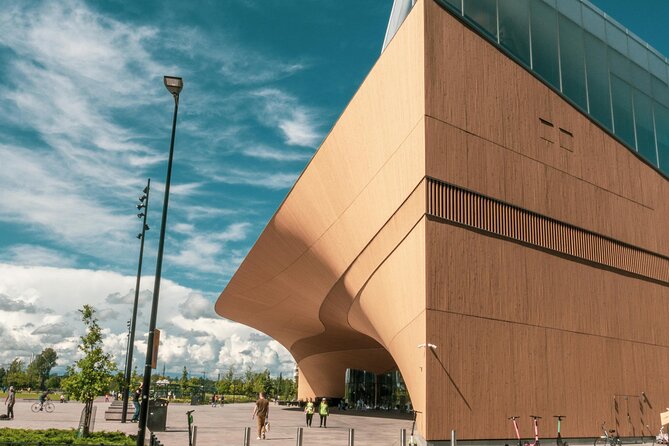
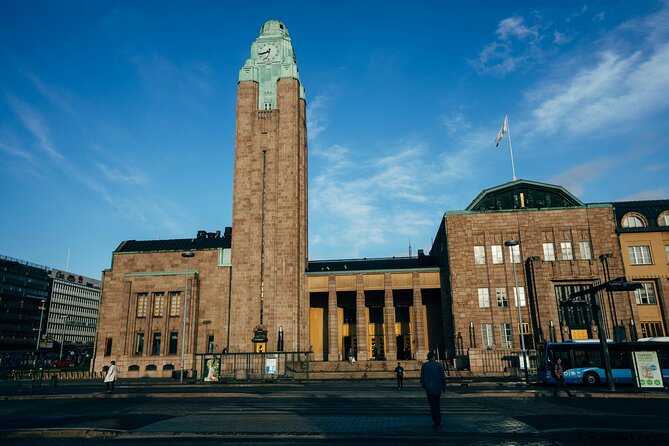
Toward the later part of the walk you reach Helsinki Central Station, then Helsinki City Museum, and finally you end at Oodi – Helsinki Central Library again. That end choice is smart. By the time you reach Oodi, you have already seen how Helsinki builds meaning into civic spaces, cultural institutions, and daily life.
Finishing at Oodi also gives you a useful payoff moment. Libraries are where you can reset, slow down, and process. You can reread your mental notes, plan your next neighborhood walk, and decide where you want to spend extra time after the guided portion ends.
I also like that the route is designed as a downtown loop feeling, so you are not stuck repeating the same streets just to finish where you started. You get a broad sweep, then a thoughtful finish point.
Who this tour fits best, and who should skip it
This experience is a great fit if you like cities that make you think while you walk. You will probably enjoy it most if you:
- want context for why places matter socially, not just what they are called
- prefer small groups (max 6) where you can actually interact
- like practical orientation for exploring on your own afterward
It is not the best fit if:
- you struggle with walking long distances (expect 5 to 6 kilometers)
- you need wheelchair accessibility, since it is not suitable for wheelchair users
- you prefer purely relaxed sightseeing with minimal guided structure
Should you book this Helsinki sociologist-led walking tour?
I would book it if your goal is understanding Helsinki beyond the usual photo stops. The combination of a PhD student in Sociology, English guidance, and a small group makes it feel less like a checklist and more like a guided way to see patterns in real space.
I would hold off only if you know you hate walking in cooler or rainy weather, or if you want a tour that is mostly anecdotes and casual chat. The emphasis is on interpreting places, and the guide’s sociological approach is the point.
FAQ
How long is the Helsinki Walking Tour with a Sociologist?
It lasts 3 hours.
How much does the tour cost?
The price is $56 per person.
How many people are in a group?
The group is limited to 6 participants.
Where do I meet the guide?
Meet in front of Fazer Café.
Where does the tour end?
It finishes at Oodi – Helsinki Central Library.
What sites are included on the walk?
Stops include Senate Square, Helsinki Cathedral, the National Library of Finland, Helsinki Central Library Oodi, President’s Palace, Uspenski Cathedral, Allas Sea Pool, Market Square and Market Hall, Swedish Theatre, Kappeli, Finnish National Theatre, Parliament House, Musiikkitalo, Johan Ludvig Runeberg’s memorial, Helsinki Central Station, Helsinki City Museum, Fazer Café Sanomatalo, and Art Museum Ateneum.
Is the tour in English?
Yes, the live tour guide speaks English.
What should I bring?
Bring comfortable shoes.
How far will I walk?
Plan for 5 to 6 kilometers of walking.
Is this tour suitable for wheelchair users?
No, it is not suitable for wheelchair users.
Fresh tracks out of Helsinki
- 5-Day Cultural Capital Tour in Helsinki, Porvoo, and Tallinn
★ 5.0 · 4 reviews - Helsinki Highlights: walking tour with local guide
★ 5.0 · 4 reviews - VIP Highlights Helsinki Sightseeing Private Service
★ 4.5 · 4 reviews - Helsinki Gems: Happiest Country Experience from Cruise Port
★ 4.5 · 4 reviews - Evening Cruise
★ 3.5 · 4 reviews - From Helsinki: Luxury Trip to Tallinn Ferry +VIP Car
★ 5.0 · 4 reviews - Explore Helsinki’s Art and Culture with a Local
★ 4.5 · 5 reviews
Guided Walks in Helsinki, compared.







Small-Group Walking Tour with City Planner Guide
Read our review →
Browse the lists this tour appears in