

Reviewed · GUIDED WALKS IN HELSINKI
Helsinki: Architecture Walking Tour with Expert
Helsinki buildings tell stories, fast, and this architecture walking tour helps you read them, one block at a time, with an expert guide connecting styles across centuries in the city center. You’ll see major landmarks that many people rush past, but the guide frames what you’re looking at through repeating architectural themes, from neoclassical formality to Art Nouveau and modern design. You get the full picture faster than if you just wander with a map.
I especially like that the tour runs in a small group of up to 6, so questions stay easy and the pace feels human. I also like the way the guide, Emek, blends architecture with Finnish life, history, and even politics, so buildings stop being just pretty facades.
One consideration: you should plan for a 5-6 km walk (about 3-4 miles), rain or shine, so comfortable shoes and weather-proof clothing are not optional.
In This Review
- Key things you’ll notice on this Helsinki architecture walk
- Why Helsinki is ideal for learning architecture on foot
- Start at Aleksanterinkatu and Kluuvikatu, then let the city’s core pull you along
- Emek’s guiding style: history and culture without the heavy lecture tone
- Senate Square: learning to read Helsinki’s civic design language
- National Library of Finland: why public knowledge looks the way it does
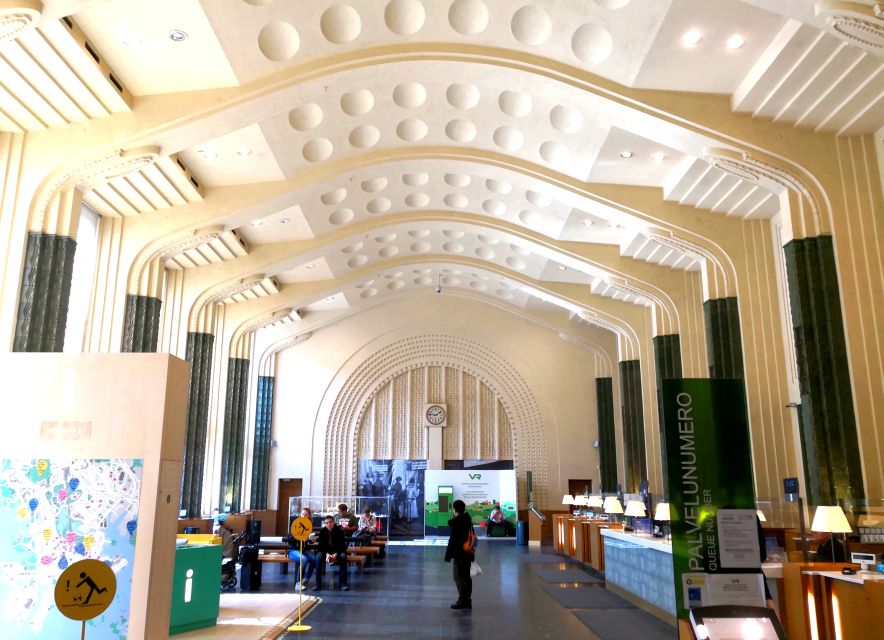
- Central Railway Station: functional design and national momentum
- Oodi and the modern library boom: contemporary Helsinki in plain sight
- JugendHall: figuring out Jugendstil, Art Nouveau, and the role of ornament
- Pohjola Insurance Building and the everyday scale of big design
- The Academic Bookstore and the bonus places that make the walk feel complete
- Timing, pace, and the real walking distance (plan for 5-6 km)
- Is $70 worth it? What you get for your money in Helsinki
- Who should book this tour (and who might want a different option)
- Should you book this Helsinki architecture walking tour?
- FAQ
- How long is the Helsinki architecture walking tour?
- Where is the meeting point?
- How far will I walk?
- Is the tour guided in English?
- What is the group size?
- Which sights are included?
- What should I wear or bring?
- Does the tour run in bad weather?
- Is the price per person and how much is it?
- Can I cancel if my plans change?
Key things you’ll notice on this Helsinki architecture walk

- A guided tour that connects styles, not just buildings, with examples spanning neoclassical, Gothic Revival, Art Nouveau (Jugendstil), Nordic classicism, modernism, functionalism, and contemporary design.
- Emek’s style of explanation, mixing architecture with Finnish culture and context without turning it into a nonstop lecture.
- Small-group energy (up to 6 people), which makes it easier to ask questions and get the tour tailored to the group.
- Big-name stops in a compact 3-hour route, including Senate Square, the National Library of Finland, Central Railway Station, Oodi, JugendHall, Pohjola Insurance Building, and the Academic Bookstore.
- All-year walking, so expect real Helsinki weather planning, not a fair-weather stroll.
Why Helsinki is ideal for learning architecture on foot

Helsinki is unusual because so many architectural periods sit close together. In the city center, you can go from neoclassical ideas to Gothic Revival accents, to Art Nouveau and Jugendstil ornament, then onward to Nordic classicism and later modernism and functionalism. It helps you understand architecture as a changing conversation, not one fixed style.
On a walking tour like this, that matters. From the street level, you see how buildings relate to each other: how one era’s symmetry compares to another era’s playful forms, and how modern design handles space for everyday life. A guide can point out patterns quickly, so you learn to look rather than just look around.
The other big reason this tour works is that it links buildings to human needs. Helsinki’s climate and culture show up in design choices, and you’ll hear those connections explained as you move between stops. That turns the tour into more than sightseeing, it becomes a practical way to read the city.
Start at Aleksanterinkatu and Kluuvikatu, then let the city’s core pull you along
The meeting point is simple to find once you know the exact corner: the corner of Aleksanterinkatu and Kluuvikatu, outside Aleksanterinkatu no 9B, in front of the Nanso Clothing Store. The guide waits there, so if you’re arriving a few minutes early, you can get your bearings fast.
This location is also smart. You’re starting in the middle of Helsinki’s action, where walking makes sense and where several major landmarks connect naturally. You’re not doing long transfers, you’re staying in the part of the city where the architectural mix is easiest to spot.
Bring the basics and you’ll enjoy the tour more. The route is built around walking, so think comfortable shoes and weather-appropriate clothing. If it’s cold or wet, you’ll be glad you dressed for real conditions instead of “tourist weather.”
More Guided Walks in Helsinki
Emek’s guiding style: history and culture without the heavy lecture tone
The guide for this tour is Emek, and his approach is a big reason the reviews lean so strongly positive. He explains architecture in a way that stays understandable, and he often ties what you see to Finnish life, history, and politics. That combination is what makes the tour feel balanced: you get structure, but not a dry slideshow.
What I like about this kind of expert-led format is the pacing. Several guides can list facts, but Emek is noted for keeping things flowing and not overly heavy. In other words, you’re learning, but you’re still enjoying the walk.
Small groups also help. With a maximum of 6 participants, it’s easier for the guide to respond to what your group cares about, rather than speaking to a crowd and hoping it lands. If you’re curious about a specific style or building type, you’re more likely to get a thoughtful answer.
Finally, Emek leads the tour in English, and that matters because architecture details are the kind of thing you want to understand fully the first time. Clear explanations reduce the mental work of translating on the fly, and you’ll remember more because it’s actually making sense.
Senate Square: learning to read Helsinki’s civic design language
Senate Square is one of those places you might have seen in photos, but on this tour it becomes a lesson in how public spaces communicate power and values. You’ll learn how different eras shaped civic architecture through layout, proportions, and the way buildings face the square. The goal is to help you spot the cues that signal a style or time period, instead of only admiring from the outside.
This is also where the guide’s architectural storytelling starts to connect. Helsinki’s architectural timeline is not a straight line, it’s more like layers overlapping. As you stand in the square’s open space, you get a feeling for why people built monumental civic buildings in the first place, and how those choices helped define the city’s identity.
One useful outcome for you: you start developing a “reading routine.” After the first major stop, you’ll be able to look at a facade and ask better questions, like what the design is trying to project, and what the era might have prioritized. That skill makes the rest of the walk click.
National Library of Finland: why public knowledge looks the way it does
Next up is the National Library of Finland, another stop that shifts the focus from street-level charm to the architecture of ideas. Libraries are more than storage, they represent education, national identity, and public access to knowledge. With an expert guide, you’re not just seeing a landmark, you’re learning why certain design choices show up in important civic buildings.
This part of the tour is where you’ll likely notice the guide’s broader context. The way the tour connects architecture to Finnish life is a recurring theme, and the library is a natural place for that conversation. You can expect explanations that help you understand what the building represents socially, not only visually.
It’s also a good checkpoint for pacing. After earlier landmark views, you’re still in the same walking rhythm, but the subject deepens. You come away with a new way to interpret “public architecture,” as something built for how people gather, learn, and move through space.
More districts covered on foot:
- Helsinki: A Finntastic Walking Tour with a Local Guide★ 5.0 · 306 reviews
- Helsinki walking tour with a city planner★ 5.0 · 175 reviews
- Helsinki Walking Tour – Small Group★ 5.0 · 155 reviews
- Helsinki: Small-Group Walking Tour with City Planner Guide★ 5.0 · 91 reviews
Central Railway Station: functional design and national momentum

Helsinki’s Central Railway Station brings a practical side of architecture into focus. Stations are where people arrive, transfer, and reset their day, so design has to support movement while still projecting character. On this tour, the station is used to show how functionality and ambition can share the same buildings.
This is also a turning point for understanding style changes over time. The tour covers modernism and functionalism as part of Helsinki’s architectural mix, and transportation hubs are perfect examples of design shaped by real daily use. The guide helps you see how buildings solve problems, like flow, visibility, and how spaces guide crowds without needing words.
If you love architecture details, this stop gives you plenty to notice. Look for how the building organizes space and how the overall massing feels from different angles. You’re learning to “read” function like you read ornament.
Oodi and the modern library boom: contemporary Helsinki in plain sight
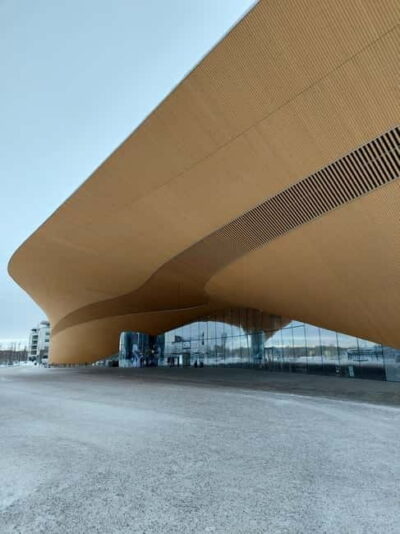
Then you reach Oodi, the new public library, and it’s a strong contrast with older civic architecture. Contemporary public buildings often signal different priorities: flexibility, community spaces, and a more everyday relationship to design. This is where you get a feel for how Helsinki treats architecture as part of daily life, not just a historical exhibit.
The tour’s architectural theme of coexistence shows up clearly here. Helsinki is not only past styles, it keeps adding new layers. Seeing Oodi after older landmarks helps you understand that architecture is still evolving, and people still care about how public space should feel.
You’ll likely appreciate the stop even if you’re not a “library person.” The guide’s explanations help you connect modern design to how people actually use spaces. When you leave, you’ll be able to notice the difference between buildings designed primarily for monumentality and buildings designed for interaction.
JugendHall: figuring out Jugendstil, Art Nouveau, and the role of ornament

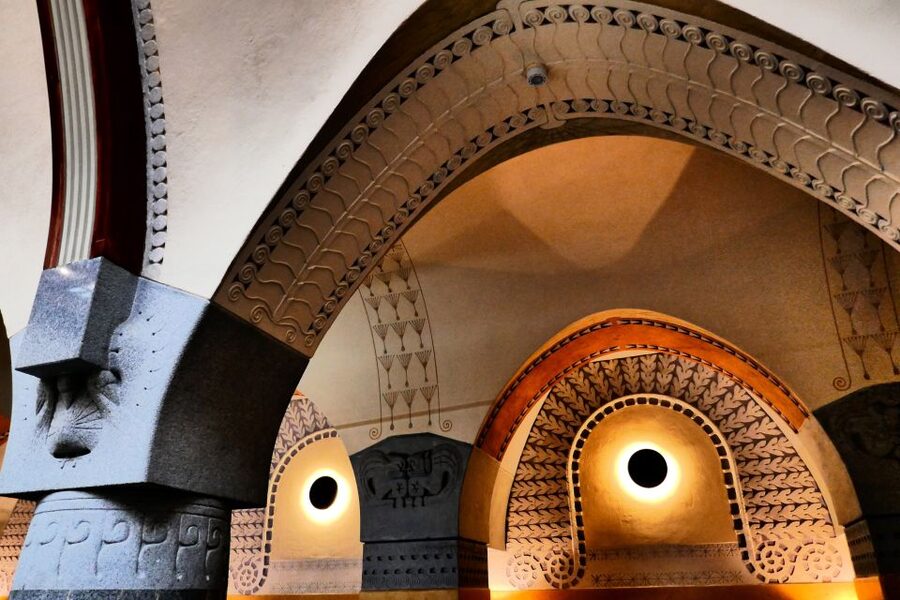
JugendHall is where the tour’s Art Nouveau chapter feels especially tangible. This is the area where you start paying attention to decorative language, not only overall form. The tour covers Art Nouveau and Jugendstil, and the guide helps you understand what makes this style recognizable in Helsinki.
Instead of treating ornament as random decoration, you’ll learn how it functions as part of the identity of a building. Ornament can hint at local taste, a specific period’s design mindset, and even cultural signals about modern life. A guide makes this way easier than guessing, because you’re being shown what to look for and why it matters.
If you enjoy visual details, this is a great moment to slow down. Take a beat, look up, and notice how decorative elements relate to structure. By this point in the walk, you’ll have the tools to connect what you’re seeing to the broader architectural story the tour is building.
Pohjola Insurance Building and the everyday scale of big design

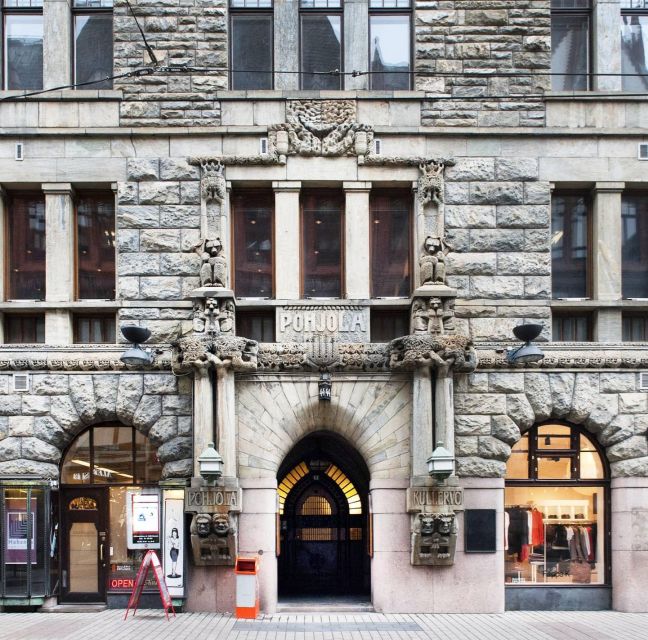
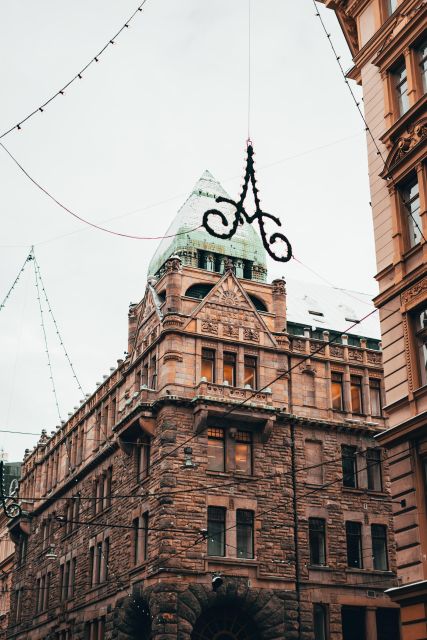
The Pohjola Insurance Building brings architecture into the world of offices and institutions. Insurance buildings have a different vibe than libraries and squares. They’re meant to feel stable and credible, and they show how style choices can serve an institution’s role in society.
This stop also fits well with the tour’s broader theme of socio-political influence. Several parts of the walk touch on how Finnish history and politics shape architecture choices. That helps you see these buildings as more than aesthetic objects, they become visible evidence of the values and priorities of the era that built them.
You’ll likely appreciate how the guide keeps tying each stop back to style and context. By now you’re building a mental map of Helsinki’s architectural timeline, and these mid-sized institutional landmarks fill in the gaps between the big headline sites.
The Academic Bookstore and the bonus places that make the walk feel complete
The route includes the Academic Bookstore, and it’s a fun shift from grand public buildings to a more human, everyday context. Bookshops and similar spaces reinforce how architectural style affects the experience of daily life. It’s one thing to talk about civic monuments, it’s another to see design used in places where you slow down, browse, and connect.
This stop also works because it reminds you that “architecture” is not only mega-projects. Helsinki’s design identity shows up in smaller landmarks too, including commercial buildings that carry a style signature. The guide’s framing helps you notice those signals, even if you’re not a specialist.
You’ll also pass other buildings along the way. The tour description signals “and more,” and in practice that helps you avoid the feeling of a checklist. You leave with more than a list of named stops, you leave understanding how the city’s architectural layers interact across the blocks.
Timing, pace, and the real walking distance (plan for 5-6 km)
This tour runs for 3 hours, and you should prepare for 3-4 miles (5-6 km) on foot. That distance is manageable for many people, but it is not a “short stroll.” You’ll get the most out of it if you treat it like an active city walk with frequent stops for explanations.
The pace is also something the guide seems to handle well. Reviews highlight that Emek keeps things well paced and understandable, even for groups with a range of ages and interests. If you’re traveling as a couple, solo, or with family members who like explanations, the small group helps the guide adjust his rhythm.
Weather is part of Helsinki reality. Tours operate all year, rain or shine. On very cold days, you can expect the guide to make practical adjustments to keep the experience comfortable, including moving indoors when possible. Still, your job is to show up ready to walk and stand outside for parts of the tour.
Is $70 worth it? What you get for your money in Helsinki
At $70 per person for 3 hours, this tour is priced like a guided specialty experience rather than a casual sightseeing add-on. The value comes from two things: expert-led explanations and the density of major landmarks packed into a compact route.
With a small group size capped at 6, you get more interaction than you would on larger bus-style tours. That means your time has better payoff, because you can ask follow-up questions and get context tied to what you’re actually seeing.
You also get a structured architectural education across multiple styles. The tour includes big names in Helsinki’s design conversation, like architects such as Engel, Saarinen, and Aalto, and it walks you through why different styles show up in the same city center. If you normally struggle to tell styles apart, this is the kind of guidance that can save you time later, because you start spotting patterns right away.
If you’re doing Helsinki for the first time and want a fast path to understanding the city, this is often a smart early-day pick. You’ll build context that makes later self-guided wandering more rewarding.
Who should book this tour (and who might want a different option)
This Helsinki architecture walking tour is a strong fit if you:
- Like learning while you walk, and you enjoy connecting buildings to culture and history.
- Want an expert who can explain styles like Jugendstil and modernism in a clear, approachable way.
- Prefer small-group tours where your questions do not get lost.
It may be less ideal if you:
- Don’t enjoy walking 5-6 km even with stops, or if you need a fully seated experience.
- Expect architecture to be explained only through visuals and not through context, culture, and history.
If you’re planning a first trip, this tour can serve as a foundation. You’ll leave with a better eye for what you’re seeing across Helsinki, not only the exact buildings named on the route.
Should you book this Helsinki architecture walking tour?
Book it if you want a focused way to learn Helsinki architecture in 3 hours, with a guide who connects buildings to Finnish life, history, and politics. The combination of Emek’s storytelling, a small group, and heavyweight landmarks like Senate Square, Central Railway Station, and Oodi makes it easier to remember what you saw and why it matters.
Skip it only if your main priority is pure sightseeing with minimal walking, because this is built around steady foot travel. If you can handle the distance and dress for the weather, you’ll come away with a city that feels much more legible, and that’s the best kind of souvenir.
FAQ
How long is the Helsinki architecture walking tour?
The tour lasts 3 hours.
Where is the meeting point?
Meet at the corner of Aleksanterinkatu street and Kluuvikatu street, in front of Aleksanterinkatu no 9B, at the Nanso Clothing Store, outside. The guide will be waiting there.
How far will I walk?
You should be prepared to walk 3-4 miles, which is about 5-6 km.
Is the tour guided in English?
Yes. The live tour guide speaks English.
What is the group size?
It is a small group limited to 6 participants.
Which sights are included?
You will see places including Senate Square, the National Library of Finland, Central Railway Station, Oodi, JugendHall, Pohjola Insurance Building, and the Academic Bookstore, plus additional stops.
What should I wear or bring?
Bring comfortable shoes and weather-appropriate clothing.
Does the tour run in bad weather?
Yes. Tours operate all year-round, rain or shine.
Is the price per person and how much is it?
Yes, it is $70 per person.
Can I cancel if my plans change?
You can cancel up to 24 hours in advance for a full refund.
Fresh tracks out of Helsinki
- 5-Day Cultural Capital Tour in Helsinki, Porvoo, and Tallinn
★ 5.0 · 4 reviews - Helsinki Highlights: walking tour with local guide
★ 5.0 · 4 reviews - VIP Highlights Helsinki Sightseeing Private Service
★ 4.5 · 4 reviews - Helsinki Gems: Happiest Country Experience from Cruise Port
★ 4.5 · 4 reviews - Evening Cruise
★ 3.5 · 4 reviews - From Helsinki: Luxury Trip to Tallinn Ferry +VIP Car
★ 5.0 · 4 reviews - Explore Helsinki’s Art and Culture with a Local
★ 4.5 · 5 reviews
Guided Walks in Helsinki, compared.






Small-Group Walking Tour with City Planner Guide
Read our review →
Browse the lists this tour appears in