
Reviewed · SNOWSHOEING TREKS
Explore Winter Woods: Snowshoe walk with local Biologist
Winter in Lapland has a way of speeding up your senses. A snowshoe walk with local biologist Terhi and hosts Arto and Terhi turns the quiet woods into a living classroom. I like that you get practical nature skills, not just photos, and I also like the small group size. One thing to consider is that winter days are cold and attention spans vary, so it helps to bring the right mindset, especially if you are traveling with kids.
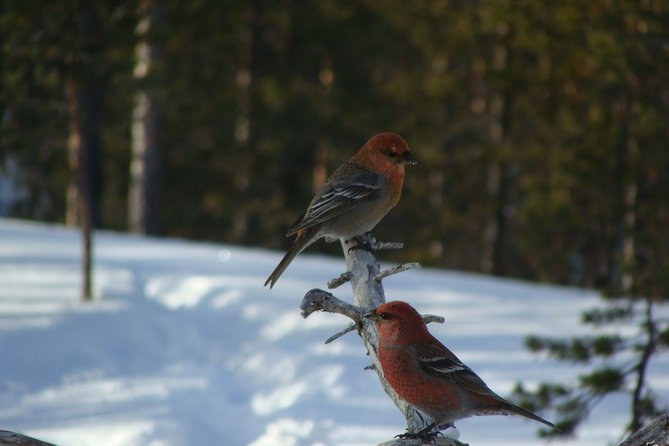
This 2.5-hour outing is built around the Arctic home life too, with an intro to bushcraft as part of everyday living. During the walk, you can watch for animal tracks and feeding birds like Siberian Jay and Siberian Tit, and with luck you may spot Elk or Mountain Hare. The possible Pine Grosbeaks are timed seasonally too, so you may get different bird action depending on when you go.
In This Review
- Winter Woods With a Biologist, Not a Scripted Tour
- Meet Terhi and Arto, Then Learn Arctic Daily Life
- Snowshoes, Timing, and What 2.5 Hours Really Means
- Into Ancient Lapland Woods Along Lakes and Mires
- Track-Spotting Like a Naturalist: Fox, Hare, and More
- Birds You Can Watch For: Siberian Jay, Siberian Tit, and Timing
- Climate Change Comes Up in Real-Life Terms
- The Kota Fire Finish: Hot Drink, Snacks, and Bird Watching
- Price and Value: What $114.02 Buys You in Real Terms
- Who Should Book This Snowshoe Walk in Inari?
- Should You Book Explore Winter Woods?
- FAQ
- Where does Explore Winter Woods start?
- What time does the tour start?
- How long is the snowshoe walk?
- Is the tour offered in English?
- How many people are in the group?
- Is there a ticket on your phone?
- What happens after the snowshoeing part?
- What wildlife might we see?
- Are there seasonal birds on the route?
- What if weather is poor?
Winter Woods With a Biologist, Not a Scripted Tour
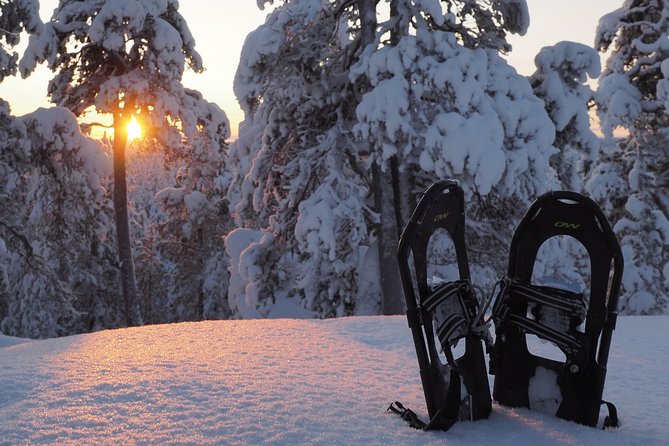
This experience is interesting because it is not only about moving through snow. You are learning how to read the winter landscape like a naturalist, and that changes everything about what you notice. Instead of staring at trees, you start noticing patterns, signs, and small details in how animals live here.
In plain terms, you learn how to look. That matters in Lapland where most people start with the same wish list, maybe Northern Lights or reindeer selfies. Here, you get a different set of skills: track spotting, basic plant and vegetation recognition, and bird behavior. It also has a humane pace because the group is capped at 6 travelers, so questions do not get swallowed by the crowd.
Meet Terhi and Arto, Then Learn Arctic Daily Life
The tour starts in Inari at Terstontie 123, with the session beginning at 10:00 am. Expect a warm welcome first, then a briefing that goes beyond where you are walking. You will get to know more about home life in the Arctic, including how bushcraft skills show up in everyday routines.
I really like this setup because it makes the forest feel less like a backdrop and more like part of a real way of living. You are not just visiting Lapland. You are meeting people who understand how to survive, move, and gather food and warmth the local way.
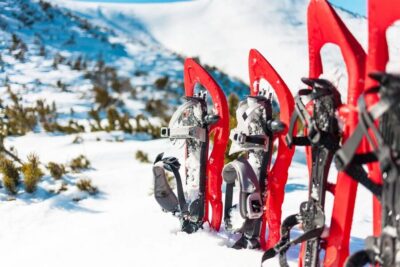
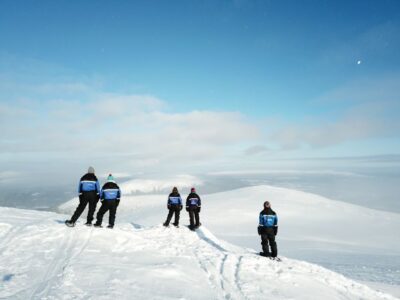
From there, you also get fitted for snow travel. In reviews, people highlight that the snowshoes and boots can be fit well, which is huge for comfort and safety when snow is deep or crusty. If you arrive thinking it will be casual walking, treat it more like guided outdoor time in winter conditions.
Snowshoes, Timing, and What 2.5 Hours Really Means
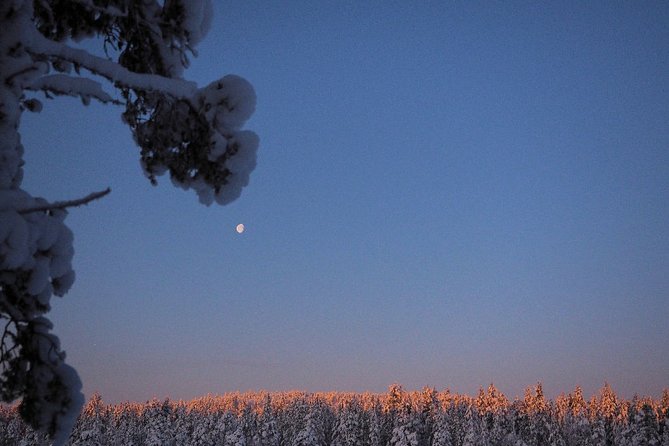
The duration is about 2 hours 30 minutes. That sounds short, but it is a good winter length because you will have time to learn and still return before anyone gets too chilled. It also works well for a first day in Lapland. You get your “nature senses” turned on, so later snow outings feel more meaningful.
You will be outside during daylight in winter, and the experience depends on good weather. That is worth respecting. If the day is windy or visibility is poor, wildlife spotting can be harder, and the organizers may adjust by offering another date or a full refund if conditions do not work.
More powder crossed on snowshoes:
Into Ancient Lapland Woods Along Lakes and Mires
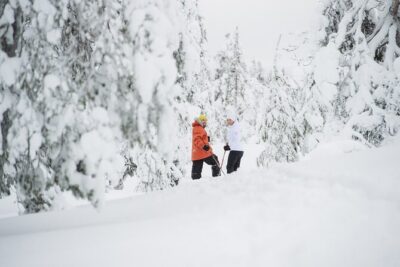
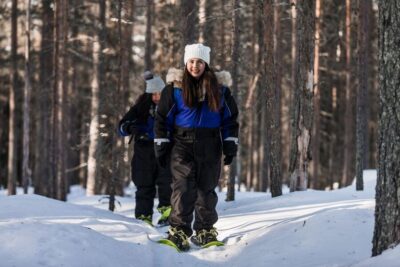
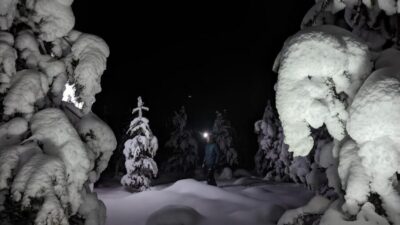
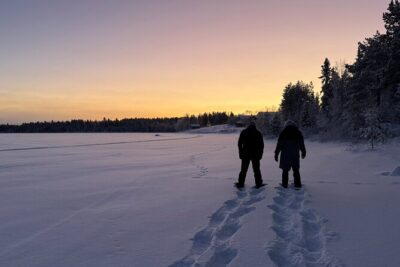
The snowshoe route goes into the ancient woods, following lakes and going toward mystic mires. This is not random snow wandering. The forest you see is described as part of the oldest forests in Lapland, so you are walking through an area that has had time to grow structure and complexity.
What makes this special for you is how the scenery supports the learning. Lakes and mires change where animals move and where they feed, so the guide can connect your observations to real habitat. In practice, you will often pause, look closely at tracks and signs, and then move on once you understand what you are seeing.
And yes, the woods can look magical. But the real win is educational. You are learning why the forest looks the way it does in winter, including how vegetation holds on, what stays visible, and what the snow hides.
Track-Spotting Like a Naturalist: Fox, Hare, and More
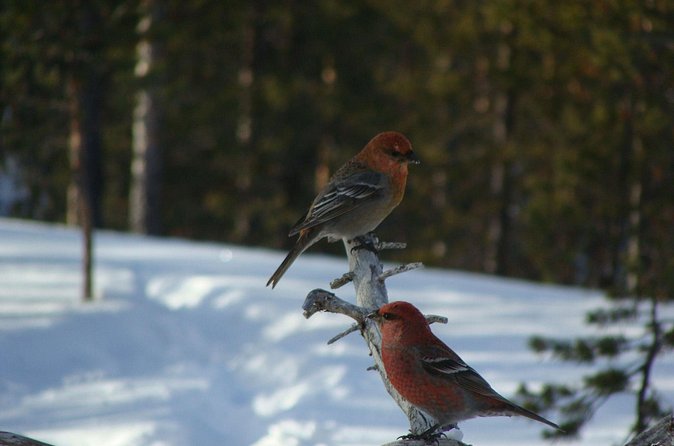
One of the most praised parts of the walk is the way you learn track recognition. People leave able to identify tracks such as red fox and hare, and that turns future hikes into something you can actively read instead of just watch.
Even if you do not spot a lot of animals directly, tracks are the main story in winter. You learn to look for direction, size, stride, and how snow conditions affect what shows up. That is the difference between wildlife tourism and actual outdoor skill building.
The guide also points out likely wildlife activity. You may observe possible animal tracks and feeding birds nearby. That pairing is smart because birds can be easier to spot when animals stay hidden, and bird behavior can hint at where food is available.
Birds You Can Watch For: Siberian Jay, Siberian Tit, and Timing
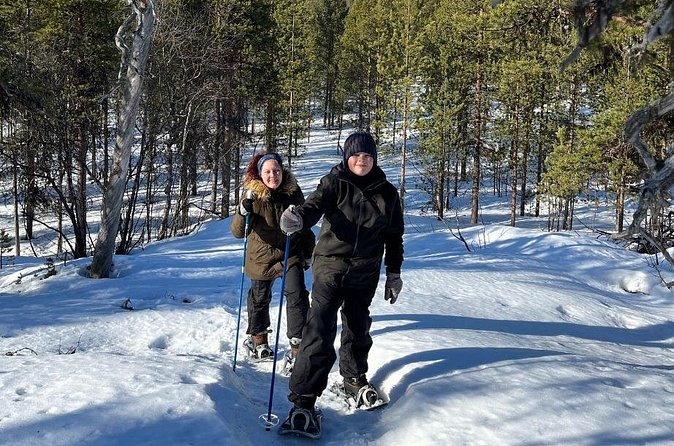
Bird spotting is a central part of this tour, and you are given specific names rather than vague “maybe some birds.” Siberian Jay and Siberian Tit are commonly around, and you may also see other species depending on the season.
There is a seasonal detail that I find especially useful for planning. By mid-February or early March, the group starts looking for the first Pine Grosbeaks to return. If you are traveling in that window, you are more likely to get that extra bird moment.
Here is the practical takeaway for you: if you care about birding, plan your Lapland timing around what you want to see. This tour can feel different from one month to the next, and that is part of the charm.
More districts covered on foot:
- A Finntastic Walking Tour in Helsinki★ 5.0 · 700 reviews
- Epic Helsinki: English Speaking Walking Tour★ 4.8 · 661 reviews
- Helsinki: Private Walking Tour with a Local★ 4.5 · 429 reviews
- Helsinki: A Finntastic Walking Tour with a Local Guide★ 5.0 · 306 reviews
Climate Change Comes Up in Real-Life Terms
In the reviews, people bring up a theme of climate change awareness. That is not presented as a lecture. It shows up through the guide’s local perspective on the environment and changes in conditions.
This is one of those moments where the “why” matters as much as the “what.” When you learn how animals and plants respond to seasons, you start to notice how fragile winter routines can be. It makes the woods feel more urgent, not just pretty.
The Kota Fire Finish: Hot Drink, Snacks, and Bird Watching
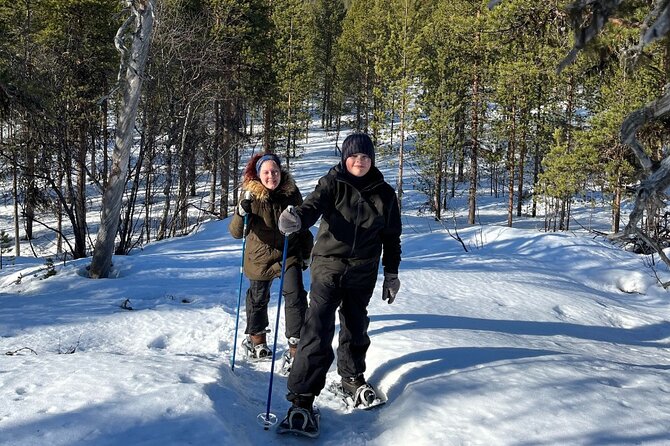
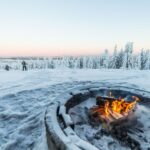
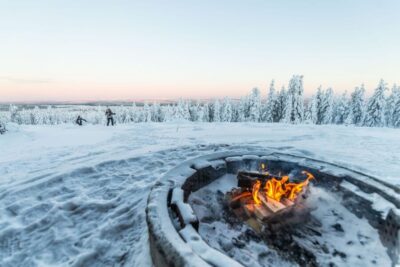
Before heading back to Inari, you warm up at an open-fire setup in a kota. This is where the experience shifts from active walking to calm, cozy time. You enjoy a hot drink and local snacks, and the group can sit while watching birds fly by.
This ending matters because it turns your effort into a reward you can actually feel. Snowshoeing is work, even when it is fun. A fire and hot food helps you reset, so you can listen better and look longer while you catch birds moving through the area.
In reviews, people mention treats like coffee or tea with buns and other homemade items. The tone is hospitality first, not restaurant style. It is the kind of break that makes you slow down, which is exactly what you need after you have been concentrating on tracks.
Price and Value: What $114.02 Buys You in Real Terms
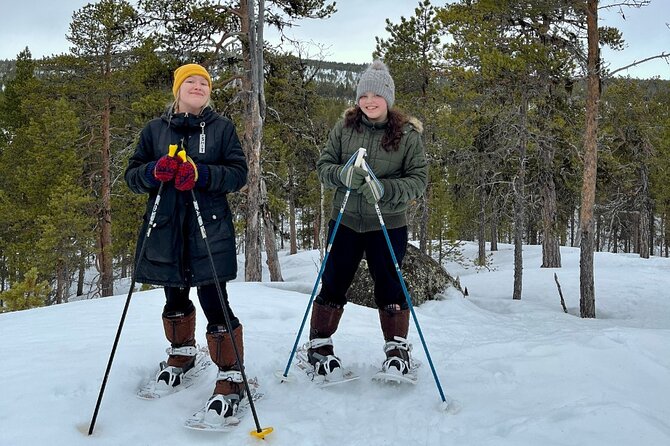
At $114.02 per person for about 2.5 hours, this is not a budget activity. But the value comes from three practical factors.
First, the group size is capped at 6 travelers, so you get real interaction and time to ask questions. In small-group nature tours, that personal attention can be the difference between learning and just hearing facts while you rush through the cold.
Second, the content is hands-on. You are not only observing, you are practicing how to identify tracks and how to think about animal behavior in winter. That turns the experience into skills you can use later.
Third, the fire-stop is included and tied to the setting. The kota snack break is not a separate add-on that feels tacked on. It is part of the pacing.
If you are choosing between a long, generic tour and a shorter, focused one, I would lean toward this kind of small guided walk when your goal is understanding the place, not checking boxes.
Who Should Book This Snowshoe Walk in Inari?
I think this works best if you like nature but want to go beyond just looking. If you want to learn how winter animals move, how to read signs, and how the forest works in cold season, you will likely have a great time.
It also fits families, with one caution that comes up in reviews: if you have younger kids, it may depend on attention span. The tour is educational and requires being outside calmly while you learn. Older kids can often handle it well, especially when they enjoy animals and questions.
Most travelers can participate, and service animals are allowed. So if you are wondering whether this is realistic for your group, it is designed to be broadly accessible. Still, come prepared for winter. Comfortable layering and good winter traction matter, because the walk happens in real snow conditions.
Should You Book Explore Winter Woods?
Yes, you should book it if your main goal is a guided winter nature experience with small group attention and real learning. I would especially pick this tour as an early stop in your trip, because the track and bird skills you practice will make later days feel richer.
Skip it or consider another option if you need a very relaxed, low-participation winter activity. This is not a sit-and-watch snowmobile-style outing. You will be outside walking, stopping, and paying attention, and the best results come when you are curious.
If you are in Lapland around mid-February to early March and bird spotting is on your mind, this walk can add an extra seasonal hook with Pine Grosbeaks.
FAQ
Where does Explore Winter Woods start?
The meeting point is Terstontie 123, 99870 Inari, Finland.
What time does the tour start?
The start time is 10:00 am.
How long is the snowshoe walk?
It lasts about 2 hours 30 minutes.
Is the tour offered in English?
Yes, the tour is offered in English.
How many people are in the group?
This activity has a maximum of 6 travelers.
Is there a ticket on your phone?
Yes, you receive a mobile ticket.
What happens after the snowshoeing part?
Before driving back to Inari, you enjoy an open-fire hot drink and local snacks in a kota.
What wildlife might we see?
You can observe possible animal tracks and nearby feeding birds. Siberian Jay and Siberian Tit are commonly around, and with luck you might see Elk and Mountain Hare.
Are there seasonal birds on the route?
By mid-February or early March, the walk may include looking for the first Pine Grosbeaks returning.
What if weather is poor?
The experience requires good weather. If it is canceled due to poor weather, you will be offered a different date or a full refund.
More Snow in Lapland
Deep-Freeze Season
Fresh tracks out of Lapland
- Premium Wilderness Skiing in Pyhä-Luosto National Park
★ 5.0 · 4 reviews - Ylläs: Guided Night Skiing Tour Under the Arctic Sky
★ 5.0 · 4 reviews - Aurora Camp and Open Fire Dinner
★ 4.5 · 4 reviews - Korouoma Canyon & Ranua Zoo Tour
★ 5.0 · 4 reviews - Private Northern Lights Tour With Skis Or Snowshoes in Pyhä
★ 5.0 · 4 reviews - Arctic Fishing & Open Fire Cooking
★ 5.0 · 5 reviews - Ivalo: Reindeer herd and fishing experience
★ 5.0 · 6 reviews
Snowshoeing Treks, compared.
Pallas-Yllästunturi National Park Snowshoeing Tour
Read our review →
Arctic Reindeer Farm Experience with Snowshoeing in the Wild
Read our review →Browse the lists this tour appears in